Consulting
Service
As a core crushing equipment in industries such as waste treatment and resource recycling, the standardization of shredder installation and commissioning directly determines operational stability, crushing efficiency, and operational safety. In actual operation, problems such as insufficient foundation precision, component assembly deviations, and improper parameter adjustments often lead to equipment jamming, excessive blade wear, and high energy consumption. This article, based on the structural characteristics of shredders (dual-shaft/single-shaft) and on-site practical needs, outlines key technical points and precise parameter standards from pre-installation preparation, core processes, phased commissioning to safety acceptance, providing standardized operating guidelines for technicians to help avoid installation hazards, ensure that the equipment quickly reaches its designed capacity and crushing effect, and lay a solid foundation for the efficient and safe operation of the production line.
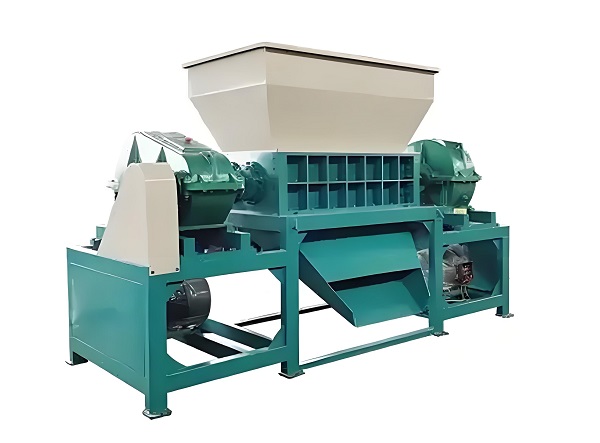
A. Pre-installation Preparation: Laying a Solid Foundation for Stable Operation The quality of shredder installation directly determines subsequent crushing efficiency, equipment lifespan, and operational safety. Sufficient preparation in terms of site, equipment, and personnel is necessary in the early stages to avoid potential hazards.
Site and Foundation Preparation: The site must meet the space requirements for equipment operation and maintenance. A maintenance passage of ≥1.8 meters should be reserved around the shredder. The distance between the feed end and the feeder should be ≥1 meter, and the distance between the discharge end and the conveyor should be ≥0.6 meters. Foundation construction must strictly follow the installation drawings, using C30 or higher grade concrete. For small shredders (processing capacity ≤50t/h), the foundation thickness should be ≥600mm; for large models (processing capacity ≥200t/h), ≥1000mm. Embedded anchor bolts (material Q355B) must be fixed using positioning templates. Bolt spacing error ≤±2mm, verticality error ≤1mm/m. Concrete curing time ≥7 days, installation can only proceed when the strength reaches ≥80% of the design value. The horizontal error of the foundation top surface should be ≤0.5mm/m, and the surface should be free of defects such as honeycomb and cracks. Simultaneously, the site must be equipped with a stable power supply (voltage fluctuation ≤±3%) and a ventilation system. In dusty environments, the installation location of dust removal equipment must be planned in advance; in humid environments, moisture-proof treatment must be carried out on the equipment.
Equipment Inspection and Parts Verification: After unpacking, check each component against the equipment list, paying particular attention to core components: ensure the cutter shaft and blades are free from transport deformation, and that the blade edges are free from cracks or nicks; check that the frame welds are full, without any detachment or porosity; and check that the bearing housings, gearboxes, and other transmission components are free from leakage and corrosion. Verify the model and quantity of vulnerable parts (blades, liners, seals), and ensure that anchor bolts, gaskets, lubricating oil, and other matching parts are complete. Conduct pre-inspections of auxiliary equipment such as motors and reducers; ensure the motor insulation resistance is ≥2MΩ and that the reducer gears have no meshing deviation. Pay special attention to checking the cutter shaft clearance (the clearance of a dual-shaft shredder is typically 0.5-2mm), ensuring it meets the requirements of the equipment manual to avoid affecting the crushing effect.
Personnel and Tool Preparation: Installation personnel must possess mechanical installation qualifications and be familiar with the shredder's structural principles (e.g., dual-shaft shearing type, single-shaft shredding type). Technical briefings should be conducted in advance. Essential tools include: a frame level with an accuracy of 0.02mm/m, a torque wrench (range 50-300N・m), lifting equipment (rated load ≥ 1.5 times the equipment weight), feeler gauges, wrenches, etc. Electrical installation must be performed by a professional electrician. Safety helmets, non-slip shoes, and insulated gloves must be provided. Warning signs should be set up on site, and restricted areas should be designated to prevent unauthorized personnel from entering.
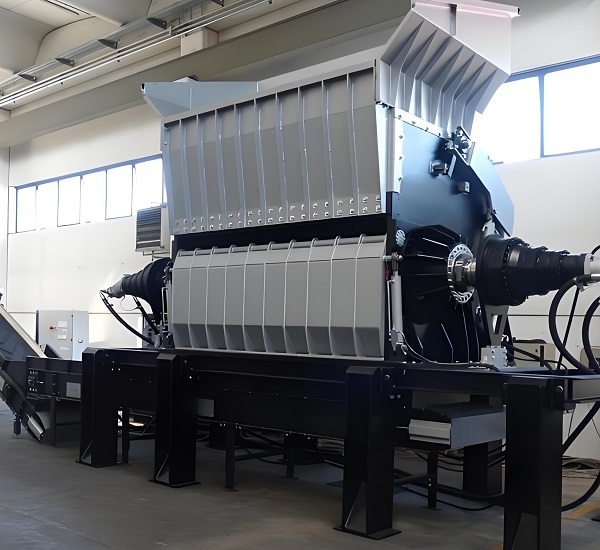
B. Core Installation Process: Precise Control of Key Aspects
Installation follows the principle of "main body first, then accessories; fixing first, then connection; rough adjustment first, then fine adjustment," focusing on controlling the assembly accuracy of the frame, transmission system, cutter shaft, and electrical and hydraulic systems.
Frame Installation and Leveling
Use lifting equipment to smoothly hoist the frame onto the foundation, ensuring precise alignment of the base bolt holes with the anchor bolts. Initially tighten the nuts (not yet to the rated torque). Use a frame level to measure the longitudinal and transverse levelness of the frame. Correct the levelness by adjusting the stainless steel shims (0.2-5mm thick) under the base, ensuring the levelness error is ≤0.2mm/m. After correction, tighten the anchor bolts diagonally in stages, using the torque value specified in the equipment manual (usually 100-200 N·m). After tightening, recheck the levelness to prevent frame displacement during tightening. After frame installation, check the contact surface between the frame and the foundation; the gap should be ≤0.1mm to ensure even stress distribution.
Transmission System Installation and Calibration: The installation of the transmission system directly affects power transmission efficiency, requiring strict control of coaxiality and meshing accuracy. First, install the motor and reducer. Secure the motor base firmly, ensuring the parallelism error between the motor shaft and the reducer input shaft is ≤0.15mm/m, and the center distance deviation between the two shafts is ≤±0.3mm. When using a coupling, the coaxiality error of the coupling should be ≤0.05mm, the end face gap should be 2-4mm, and the elastic pad should be installed correctly without misalignment. When using a belt drive, the pulley alignment deviation should be ≤0.5mm, and the belt tension should be such that the belt sinks 8-12mm when pressed at the midpoint. When installing the cutter shaft and gearbox, ensure the bearings are properly assembled, the bearing clearance is controlled at 0.03-0.08mm, and add lithium-based grease to half the bearing cavity volume. The cutter shaft should rotate freely without jamming, and the gear meshing clearance should be uniform (usually 0.2-0.5mm).
Cutter Shaft and Blade Installation: Before installing the cutter shaft, clean the surface of oil and impurities, and check that the cutter shaft is not bent or deformed. When installing the blades, ensure that the blade edges face the same direction (for dual-shaft shredder blades, cross meshing is required), and that the blades are tightly fitted to the cutter shaft with a gap ≤0.3mm. The blades are secured using a bolt + locking washer structure. The bolt tightening torque should be as specified in the instruction manual (typically 60-100 N·m). Anti-loosening nuts should be installed to prevent loosening. For dual-shaft shredders, the gap between the two blade shafts needs adjustment. This gap should be controlled between 0.5-2 mm (adjusted according to the particle size requirements of the material to be shredded) using an adjusting screw or hydraulic device. Use a feeler gauge to measure the gap evenly at both ends and the middle of the blade shaft; the difference should be ≤0.3 mm. After installation, manually rotate the blade shafts to check for blade interference, jamming, and smooth rotation.
Hydraulic and Electrical System Installation: Before connecting the hydraulic system (equipped in some large shredders), flush the pipes with high-pressure oil to remove impurities. Install oil-resistant sealing rings at pipe joints, and tighten bolts evenly without leakage. Fill the hydraulic oil tank with No. 46 anti-wear hydraulic oil to the center line of the oil window. Start the hydraulic pump and run it unloaded for 5-10 minutes to purge air from the system. Check that the cylinders extend and retract flexibly and that the pressure is stable within the design range (typically 8-15 MPa). The electrical system installation strictly follows the "Code for Construction and Acceptance of Electrical Installations". Wiring of motors, sensors (temperature and pressure sensors), and control cabinets is secure, and the grounding resistance of the grounding wire is ≤4Ω. The control cabinet is installed in a dry, ventilated, and easily accessible location, at least 1.5 meters away from the equipment, with neat wiring and clear labeling. The emergency stop button, frequency converter, and other functions are tested and found to be normal; the motor rotation direction matches the arrow on the equipment label.
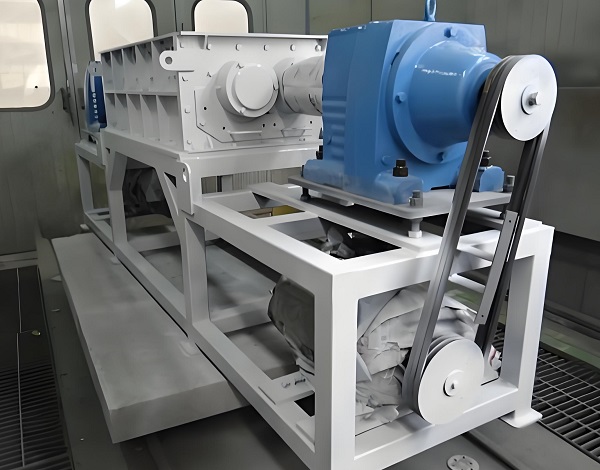
C. Phased Commissioning: Achieving Efficient and Stable Operation
Commissioning is conducted in the following sequence: "No-load commissioning - Load commissioning - Parameter optimization," gradually troubleshooting problems to ensure the equipment reaches its designed processing capacity and crushing effect.
No-load commissioning: Verifying equipment operational stability
Before no-load commissioning, recheck the tightness of all bolts, remove debris from the cutter shaft, and confirm that the lubrication, hydraulic (if applicable), and electrical systems are normal. Start the equipment according to the following steps: First, start the lubrication system (if applicable) and run it for 5 minutes to ensure normal oil supply; then start the main motor, briefly turning it 2-3 times to observe that the motor rotation is correct, the cutter shaft rotates smoothly, and there are no abnormal noises or severe vibrations. After successful jogging, run continuously under no-load for 4-6 hours, monitoring key parameters: motor current 20%-40% of rated current, bearing temperature ≤70℃, vibration speed ≤3.5mm/s, stable hydraulic system pressure (if present), and no leakage or abnormal noise. If excessive vibration occurs, check the frame fixation, coupling coaxiality, or cutter shaft balance; if the bearing temperature is too high, check for sufficient lubrication or a normal cooling system.
Load Testing: Optimizing Crushing Effect After successful no-load testing, conduct load testing, gradually increasing the feed rate to avoid full-load operation at once. Initially feed at 30% of the designed processing capacity, using materials suitable for the equipment (such as plastics, wood, construction waste), and run for 1-2 hours, observing the material crushing state: material enters the crushing chamber evenly, without jamming or uneven loading, and the particle size after crushing meets requirements (usually 10-50mm, adjusted according to needs). Gradually increase the feed rate to 50%, 80%, and 100%, maintaining stable operation for 2 hours after each increase, and recording parameters such as throughput, discharge particle size, motor current, and energy consumption. Check the crushing ratio (typically 5-10). If the discharge particle size is too large, adjust the cutter shaft clearance or replace the blades; if the throughput is insufficient, check the feed uniformity or motor speed; if material jamming occurs, reverse the cutter shaft via the hydraulic system (if applicable) to discharge the material and investigate the cause of the jamming.
Common Problems and Solutions
Problems and solutions that may occur during load commissioning:
① Cutter shaft jamming: Excessive feed rate or contamination with uncrushable materials. Reduce feed rate and install iron and impurity removal devices.
② Uneven discharge particle size: Cutter shaft clearance deviation or blade wear. Readjust clearance or replace blades.
③ Motor overload: Material hardness exceeds standard or cutter shaft speed is too high. Replace with a suitable cavity type or adjust the frequency converter to reduce speed.
④ Abnormal equipment noise: Poor gear meshing or damaged bearings. Check and adjust gear clearance, replace damaged bearings.
⑤ Hydraulic system overheating: Cooler blockage or insufficient oil. Clean the cooler and replenish hydraulic oil.
D. Safety Specifications and Acceptance Standards
After installation and commissioning, a comprehensive acceptance test must be conducted, and a maintenance system must be established to ensure long-term safe operation of the equipment.
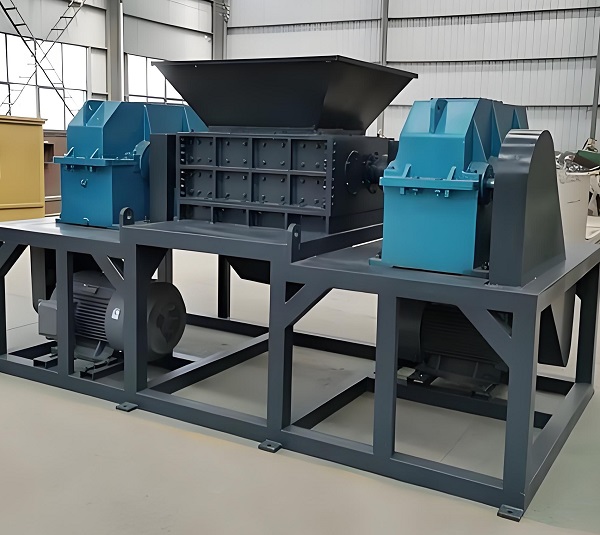
Safety Operation Specifications
Operators must be trained and qualified before starting work and must strictly adhere to the operating procedures: Start-up sequence: Lubrication system (if applicable) → Main motor → Feeder; Shutdown sequence: Feeder → Main motor → Lubrication system (Lubrication system shutdown delayed by 5 minutes). During equipment operation, it is forbidden to open the observation door or perform maintenance. Hands or foreign objects must not be inserted into the crushing chamber. In case of emergency, immediately press the emergency stop button and disconnect the power supply before proceeding. Regularly check that the safety protection devices (protective covers, guardrails) are intact; it is strictly forbidden to operate the equipment without removing safety devices. When feeding, ensure the material is uniform and avoid large or hard foreign objects from entering to prevent damage to the blades.
Installation and Acceptance Standards
Acceptance must meet the following indicators: ① Equipment levelness error ≤ 0.2mm/m, frame and foundation tightly fitted; ② Transmission system runs smoothly without tooth grinding or slippage, coupling coaxiality ≤ 0.05mm; ③ Cutter shaft rotates flexibly, blade gap is uniform, and the qualified particle size rate of crushed material ≥ 85%; ④ During no-load operation, motor current, bearing temperature, vibration speed, and other parameters meet requirements, and continuous operation for 4 hours without failure; ⑤ During load operation, the processing capacity reaches more than 95% of the design value, unit energy consumption meets the requirements of the equipment manual, and there is no leakage or abnormal noise. After acceptance, compile and file the installation drawings, commissioning records, test reports, and other documents.
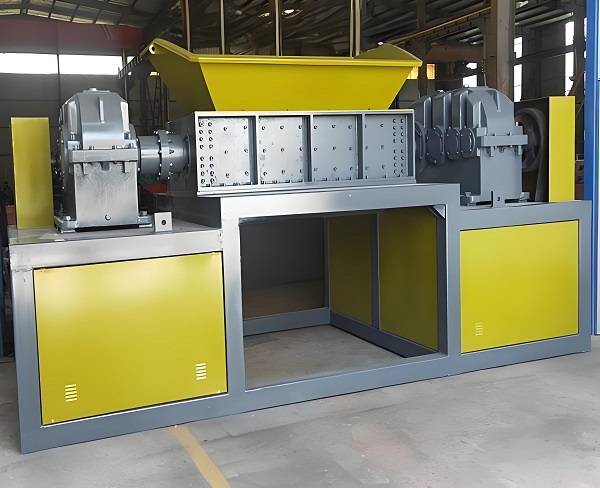
Pre-maintenance requirements: Hand over the equipment manual and maintenance manual to operators, and train them on key points of daily inspection: daily check of bolt tightness, lubrication and hydraulic oil levels (if applicable), and abnormal noises during equipment operation; weekly check of blade wear, belt tension, and filter cleanliness; monthly change of lubricating oil (replace after the first 500 hours of operation, and every 2000 hours thereafter), and cleaning of the oil tank and filter; quarterly comprehensive inspection of the cutter shaft and gearbox, and replacement of aged seals and worn blades. Establish a maintenance log to record operating parameters, troubleshooting, and replacement cycles of vulnerable parts, ensuring long-term stable operation of the equipment.
The installation and commissioning of the shredder is a systematic project that requires adherence to the principles of "precise assembly, scientific commissioning, and strict acceptance." By standardizing site preparation, strictly controlling the levelness of the frame and the coaxiality of the transmission system, and precisely adjusting the cutter shaft clearance, a solid foundation for equipment operation can be ensured; step-by-step commissioning according to "no-load - load" and optimization of hydraulic, lubrication, and electrical system parameters can effectively improve crushing efficiency and operational stability. Following safe operating procedures and post-maintenance requirements can significantly reduce the risk of failure and extend the lifespan of critical components such as blades and bearings. The comprehensive process specifications and technical points described in this article can help companies reduce installation and maintenance costs, fully utilize the crushing efficiency of shredders, and provide reliable equipment support for waste resource recovery and material volume reduction.


Company: Zhengzhou ZhongCheng environmental protection equipment co., LTD

Company address: 36 xueyuan road, Zhengzhou City, Henan Province, China.

Whatsapp:+86-18738194110


Our Email

Our phone
 86-18738194110
 86-18738194110

Save Time! Get A Detailed Quotation Quickly.



 2026-04-22