Consulting
Service
Vibrating screens, as key sorting equipment in fields such as mining, building materials processing, and chemical separation, have their installation and commissioning quality directly determining the equipment's operational stability, sorting accuracy, and service life. Under a globalized industrial layout, geological conditions, working conditions, and safety standards vary significantly across different regions—from heavy-duty vibrating screens in Australian iron ore mines to precision screening equipment in the European chemical industry, from simple screening systems in African gold mines to sanitary-grade vibrating screens in North American food processing. Installation and commissioning must consider both equipment characteristics and regional requirements. Based on the International Organization for Standardization (ISO) 13786 "Vibrating Screening Equipment - Technical Conditions" and regional standards such as ASTM D4487 in the United States and EN 12642 in the European Union, this article reviews the core processes, key technologies, and adaptation strategies for vibrating screen installation and commissioning from a global perspective.
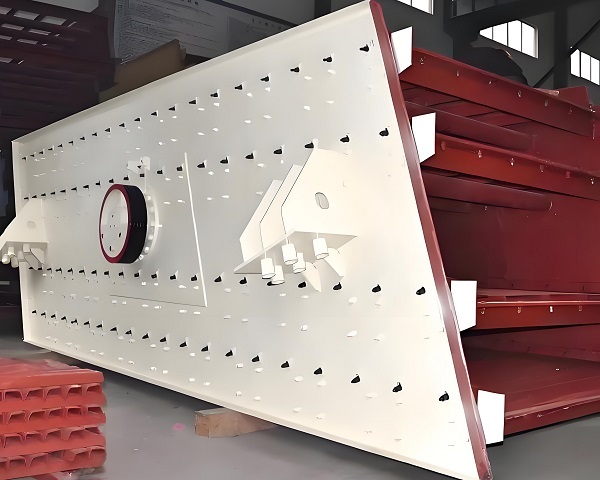
Precise preparation before installation is fundamental to avoiding subsequent risks, focusing on achieving a three-dimensional fit between "equipment, site, and working conditions." During the site survey phase, the foundation design needs to be adjusted based on regional geological characteristics: in earthquake-prone areas such as Japan and Chile, the concrete strength grade of the foundation needs to be increased to C40 or higher, and rubber shock absorbers and seismic anchor bolts should be added to ensure stable operation of the equipment in environments with seismic intensity above magnitude 8; in arid regions around the Sahara Desert in Africa, the bearing capacity of sandy soil needs to be considered, using a "reinforced concrete pile foundation + crushed stone cushion" structure to control foundation settlement within 2 mm/year.
Equipment acceptance and storage must comply with global logistics standards. For large circular vibrating screens shipped from Germany to Brazil, pre-assembly testing of components must be completed before shipment, focusing on checking the connection accuracy between the exciter and the screen box, with an error control within 0.1 mm; vacuum packaging and moisture-proof cushioning materials should be used during transportation to prevent component corrosion in the high-humidity environment of Southeast Asia. During on-site storage, in low-temperature regions such as Siberia in Russia, precision components such as motors and bearings should be stored in a constant-temperature warehouse (temperature not lower than 5℃) to prevent the lubricating oil from solidifying and affecting subsequent installation.
Foundation construction and equipment positioning are core processes of installation, and their accuracy directly determines the operational stability of the vibrating screen. Foundation pouring must strictly follow the baseline provided by the equipment manufacturer. In Europe and America, laser levels are commonly used for leveling, ensuring that the foundation top surface levelness error does not exceed 0.2mm/m; for heavy-duty vibrating screens in Australian mining areas, the foundation bolts must be made of high-temperature resistant alloy material, embedded to a depth of at least 3 times the bolt length, and a specified pre-tightening force (usually 200-300 N·m) must be applied using a torque wrench.
Equipment lifting and installation must comply with lifting regulations in different regions. When lifting linear vibrating screens weighing over 30 tons in the Middle East, lifting equipment conforming to Saudi Arabian SASO standards must be selected, and the safety factor of the lifting ropes must be no less than 6 times; in some European countries, lifting operations require professional signalmen and ground supervisors, and lifting time must avoid strong winds (wind speed exceeding level 5), thunderstorms, and other adverse weather conditions. After lifting and positioning, the screen box is leveled by adjusting the shims, controlling the lateral levelness error within 0.5mm/m to ensure uniform transmission of excitation force.
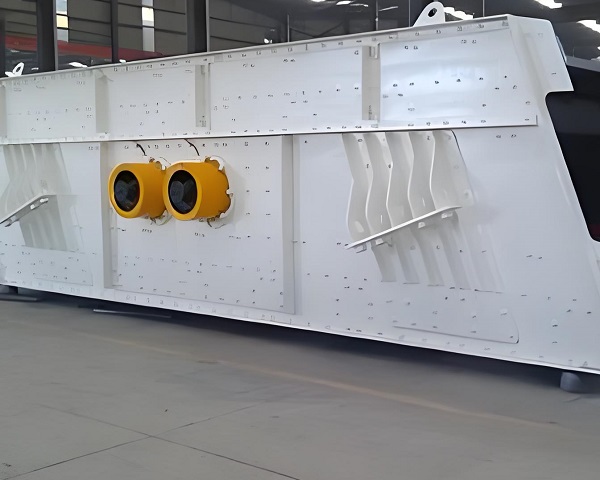
Component assembly requires attention to detail and standardized operation. Exciter installation is a critical step; in North America, hydraulic tensioners are commonly used to install bolts, ensuring even force distribution on each bolt; for anti-corrosion vibrating screens in the chemical industry, the connection between the screen mesh and the screen frame must use titanium alloy bolts to prevent loosening due to chemical corrosion. For the belt drive connection between the motor and the exciter, the belt tension must be moderate. In high-temperature regions such as India and Southeast Asia, high-temperature resistant V-belts should be selected, and a 1-2mm belt elongation compensation space should be reserved.
The installation of sealing and protective devices must be adapted to regional environmental characteristics. In rainy and snowy areas of Northern Europe, a stainless steel rain cover should be installed on the top of the screen box, and the joints should be treated with low-temperature resistant sealant; in the desert areas of the Middle East, a high-efficiency air filter with a filtration accuracy of 5μm should be installed at the equipment air inlet to prevent sand and dust from entering the exciter and causing wear; in the food processing industry (such as in European EFSA certified scenarios), the parts of the vibrating screen that come into contact with materials must be made of 316L stainless steel, and the seals should be made of food-grade silicone rubber to ensure compliance with hygiene standards. Debugging work must follow a progressive process of "no-load debugging - load debugging - performance optimization," while also meeting the sorting requirements of different industries. During the no-load debugging phase, the motor rotation direction is checked first to ensure that the two vibrators rotate in the same direction (e.g., German KHD vibrating screens require clockwise synchronous rotation); the equipment vibration frequency is monitored using a spectrum analyzer, with a deviation from the design value not exceeding ±1Hz. In North American mining applications, the no-load running time is usually no less than 4 hours, with a focus on checking bearing temperature (not exceeding 75℃) and equipment noise (below 85dB), complying with OSHA occupational health standards.
Load debugging requires differentiated solutions based on material characteristics. For magnetite screening in Australian iron ore mining, the feed rate needs to be gradually increased (from 50% to 100% of the design capacity), monitoring the particle size of the undersize product using an online particle size analyzer, and adjusting the screen surface inclination (usually 15°-20°) and vibration force; in powder screening in the European chemical industry, the feeding speed needs to be controlled to ensure uniformity and prevent material accumulation on the screen surface, while adjusting the vibration frequency (15-25Hz) to reduce electrostatic adsorption problems of the powder. During load debugging, in precious metal sorting scenarios such as South African gold mines, the focus is on monitoring screening efficiency to ensure a gold ore recovery rate of no less than 95%.
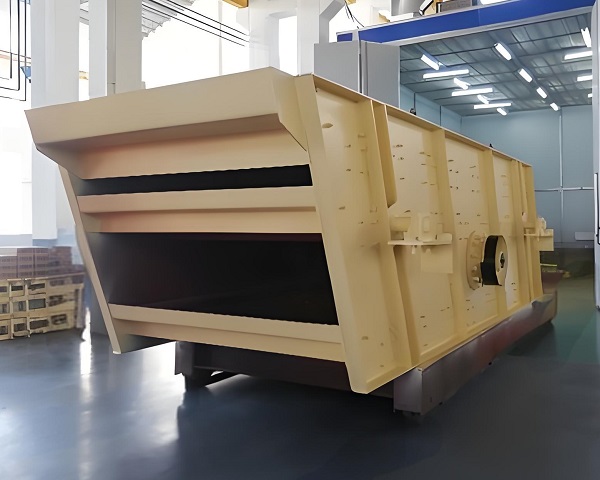
Performance optimization is the core objective of debugging, requiring parameter iteration to achieve the best sorting effect. In a Brazilian manganese ore project, by adjusting the eccentric block angle of the vibrator (from 0° to 60°), the screen surface amplitude was increased from 3mm to 5mm, solving the problem of incomplete screening caused by manganese ore particle adhesion; in a European construction waste recycling project, a "variable frequency speed control + graded vibration" mode was adopted, optimizing vibration parameters for recycled aggregates of different particle sizes, improving the grading accuracy of aggregates by 20%. For heat-sensitive materials (such as cephalosporin powder in the pharmaceutical industry), the vibration frequency needs to be reduced and a flexible screen surface used to prevent material deterioration due to frictional heat.
Safety regulations and operation and maintenance training are important extensions of global installation and commissioning. In terms of equipment operational safety, regional safety standards must be met: in the EU, protective barriers conforming to EN ISO 14120 must be installed around the vibrating screen, with a height of no less than 1.2m; in North America, an emergency stop button with a response time of no more than 0.5 seconds must be provided, along with equipment operating status indicator lights. For operators in emerging markets such as Africa and Southeast Asia, multilingual training manuals (English, French, Spanish, etc.) must be provided, covering key points of daily equipment inspection, common troubleshooting methods (such as abnormal vibrator noise, screen mesh damage, etc.), and emergency procedures.
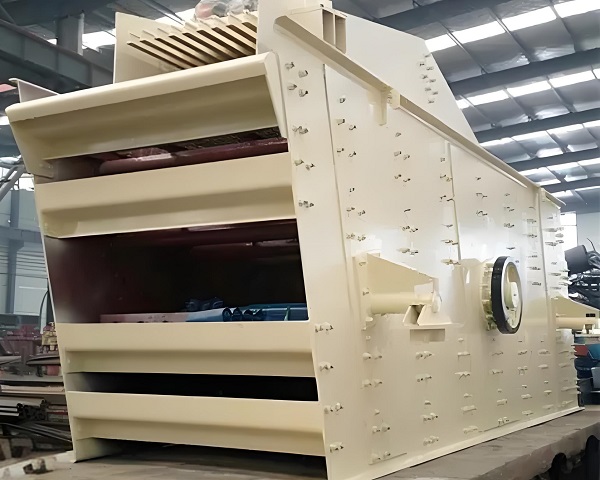
Acceptance testing after commissioning requires a globally recognized test report. Test items include: equipment operating parameters (vibration frequency, amplitude, noise), sorting performance (throughput, screening efficiency, particle size accuracy), and safety indicators (integrity of protective devices, electrical insulation). In resource-rich countries such as Australia and Canada, third-party testing by local mining associations (such as AMCA, CIM) is required to ensure the equipment meets mining production requirements; in the European chemical industry, CE certification is required to demonstrate compliance with EU health, safety, and environmental directives.
The installation and commissioning of vibrating screens is essentially a system engineering project of "standardized technology + regional adaptation," requiring adherence to general requirements of international standards such as ISO, while also fully considering the geological conditions, working characteristics, safety regulations, and industry needs of different regions. From precision manufacturing in Germany to mining applications in Brazil, from environmental requirements in Northern Europe to operational realities in Africa, only by achieving a deep integration of technical specifications and regional needs can the long-term stable operation of vibrating screens be ensured, maximizing production efficiency and sorting accuracy. In the context of collaborative development of the global industrial chain, the global adaptability of installation and commissioning technology has become an important component of equipment manufacturers' core competitiveness.


Company: Zhengzhou ZhongCheng environmental protection equipment co., LTD

Company address: 36 xueyuan road, Zhengzhou City, Henan Province, China.

Whatsapp:+86-18738194110


Our Email

Our phone
 86-18738194110
 86-18738194110

Save Time! Get A Detailed Quotation Quickly.


 2026-04-22