Consulting
Service
Wind Sifter are core sorting equipment in waste resource utilization, relying on aerodynamic principles to separate materials of different densities through wind force differences. They are widely used in the sorting of municipal solid waste, construction waste, and industrial waste, significantly improving the efficiency of waste classification and recycling. Their installation accuracy directly affects sorting accuracy and operational stability, while daily maintenance is crucial for equipment lifespan and continuous operation. This article, combining the structural characteristics of Wind Sifter and practical waste treatment scenarios, details the installation process, key points, and daily maintenance procedures, providing practical guidance for safe and efficient equipment operation.
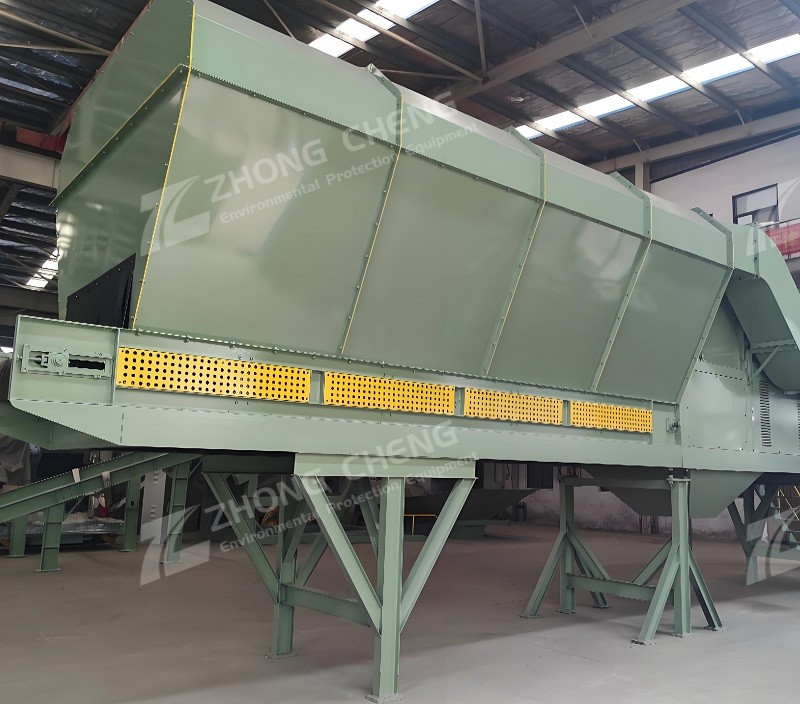
Wind Sifter installation must follow the principles of "precise positioning, standardized assembly, and rigorous debugging," with thorough preparation to avoid potential installation deviations. Before installation, the equipment's integrity must be verified. Check the main unit, fan, air ducts, feeding device, discharge hopper, dust removal equipment, and other components against the packing list, inspecting for any damage, deformation, or missing parts caused during transportation. Pay particular attention to critical parts such as the fan impeller and air duct connections. Any damage or deformation should be addressed promptly to avoid affecting subsequent operation. Simultaneously, plan a suitable installation site, choosing a flat, well-ventilated, and dry area, away from flammable and explosive materials. The ground bearing capacity must meet the requirements for equipment operation and material storage to prevent future ground settlement and equipment tilting. Furthermore, verify that the installation foundation dimensions and elevation conform to design specifications. The foundation surface must be flat and smooth, with precisely positioned pre-drilled holes. Installation should only commence after the foundation curing is complete.
The assembly of core components is critical to installation, requiring strict control of installation accuracy to ensure coordinated equipment operation. First, install the main unit. Lift the main unit to the pre-reserved position on the foundation, using a level and a theodolite to check and adjust the unit's levelness and verticality point by point, ensuring that deviations meet specifications. Then, tighten the anchor bolts, using a secondary grouting process for fixation. After the grouting layer has completely solidified, re-check the levelness and bolt tightness to prevent vibration during operation. Next, install the fan and ductwork. The fan should be installed at a reasonable distance from the main unit and securely fixed. Vibration damping pads should be added to the fan base to reduce vibration transmission during operation. Duct connections must be tightly sealed, with gaskets added at the joints to prevent air leaks. Ensure the ductwork is smooth and free of bends or blockages, and that the slope of the ductwork meets design requirements to facilitate material transport and dust removal. The feeding device and discharge hopper must be aligned with the main unit's inlet and outlet, and securely fixed. Adjust the feeding speed control mechanism to ensure even feeding and prevent overloading the equipment due to excessive feeding.
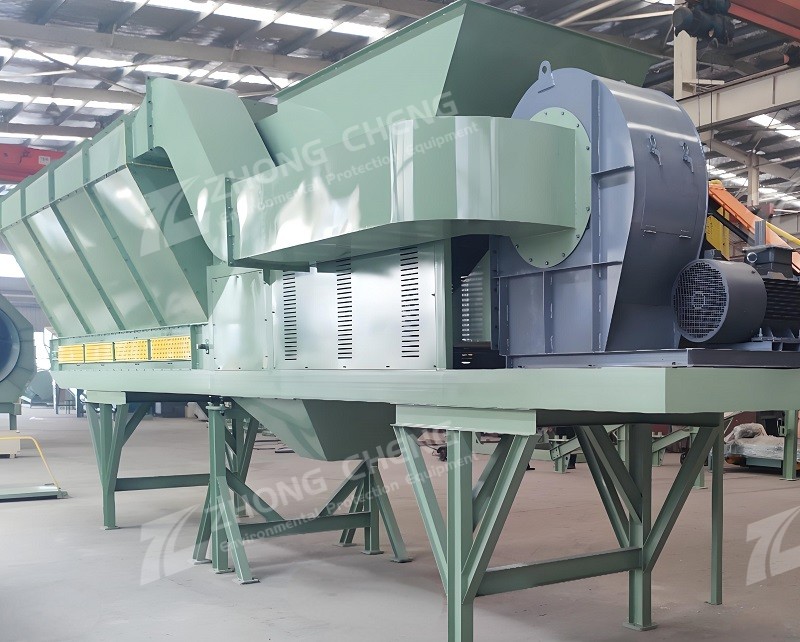
The installation and commissioning of auxiliary systems should not be overlooked. Dust removal and electrical systems must be assembled simultaneously to ensure environmental protection and safety during operation. The air separator generates a large amount of dust during operation, so dust removal equipment must be installed. The dust removal equipment should be precisely connected to the ductwork and main unit, ensuring a tight seal to prevent dust leakage, which could cause environmental pollution and equipment wear. Electrical system installation must be performed by qualified personnel. Power lines and control lines must be securely connected, and a qualified grounding protection device must be installed. Check that the components in the distribution box are functioning correctly, and test the start/stop switch and wind speed adjustment buttons to ensure the electrical control system is sensitive and effective, preventing electrical faults that could lead to equipment shutdown or electric shock. After installation, a comprehensive commissioning process is required. First, perform a no-load test, running the equipment for 1-2 hours. Observe the fan speed, main unit operating sound, and ductwork sealing. Monitor the bearing temperature to ensure it does not exceed 75℃. If any abnormal noise, air leakage, or overheating occurs, immediately stop the equipment for inspection and correction.
After successful no-load testing, conduct a load test. Gradually introduce pre-treated waste materials, adjust the fan speed and feeding speed, and verify that the sorting accuracy meets the requirements. Observe the material separation effect, and fine-tune the wind speed and feeding angle to ensure satisfactory separation of light materials (plastics, fabrics) and heavy materials (sand, metal). Also, check that the material is discharged smoothly from the discharge hopper, that there are no blockages in the ductwork, and that the dust removal equipment is functioning correctly. Only after successful commissioning can the equipment be put into formal operation. It is important to note that during load testing, professional personnel must be on-site throughout the process to closely monitor the equipment's operating status and promptly address any unexpected problems.
Routine maintenance should be carried out regularly, focusing on three core areas: cleaning, lubrication, and component inspection, to extend the equipment's service life. Cleaning and maintenance are fundamental; after each day's operation, residual materials in the main unit, feed inlet, discharge outlet, and air ducts should be cleaned promptly to prevent material clumping and blockage. Dust and debris on the equipment surface should also be cleaned to prevent dust from entering the equipment and causing wear on internal components. The filter bags and dust collection bins of the dust removal equipment should be cleaned regularly, and clogged or damaged filter bags should be replaced to ensure effective dust removal and prevent dust accumulation from affecting equipment operation. Lubrication maintenance must be precise and thorough; the lubrication of the fan bearings and main unit transmission components should be checked regularly, and qualified lubricating oil should be added to ensure sufficient oil level and good oil quality. The oil quality should be checked monthly; if the oil is cloudy or contains impurities, the lubricating oil and oil filter should be replaced promptly to prevent insufficient lubrication from causing component wear and jamming.
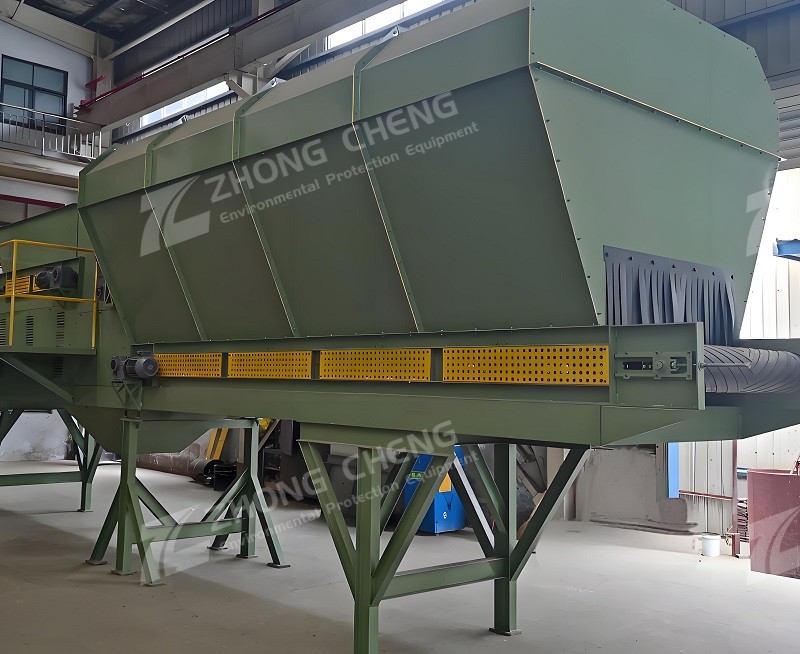
Regular inspection and replacement of components are crucial to prevent the escalation of malfunctions. Before each day's operation, check whether the fan impeller is dusty or deformed, whether the air duct connections are tightly sealed, and whether the feeding device and discharge hopper are intact; check whether the electrical system wiring is secure, whether the grounding protection is reliable, and whether the start/stop switch and wind speed adjustment mechanism are sensitive. Weekly, comprehensively inspect fasteners such as anchor bolts and air duct connection bolts, and tighten any loose bolts immediately; check the fan's operating status and inspect the impeller for wear. If the impeller is severely worn or deformed, replace it promptly. Monthly, check the aging of seals and shock absorbers, and replace aged or damaged seals and shock absorbers to prevent air leakage and increased vibration; verify the sorting accuracy, and if the sorting effect decreases, adjust the wind speed or check for any abnormalities in the equipment components.
The installation accuracy and daily maintenance of the air separator directly determine its sorting efficiency in waste treatment. Proper installation and commissioning can prevent problems such as air leakage, vibration, and inaccurate sorting from the outset; consistently implementing maintenance procedures can effectively reduce equipment failures and ensure continuous operation. Strict adherence to the installation process, precise control of every step, optimization of maintenance plans based on waste treatment scenarios, and enhanced professional training for operators and standardized operating procedures are all necessary to fully utilize the sorting advantages of the air separator, facilitate the resource-oriented classification and recycling of waste, and improve processing efficiency.


Company: Zhengzhou ZhongCheng environmental protection equipment co., LTD

Company address: 36 xueyuan road, Zhengzhou City, Henan Province, China.

Whatsapp:+86-18738194110


Our Email

Our phone
 86-18738194110
 86-18738194110

Save Time! Get A Detailed Quotation Quickly.



 2026-04-22