Consulting
Service
The iron removal efficiency of an iron separator directly determines its application value in scenarios such as waste sorting, coal processing, and metallurgical production. It not only affects the stability and safety of subsequent production processes but also relates to the economic benefits and resource recovery efficiency of the enterprise. Iron removal efficiency refers to the proportion of ferromagnetic impurities removed from the material by the iron separator per unit time, and it is affected by multiple factors such as equipment selection, installation accuracy, operating parameters, and maintenance quality. To accurately improve iron removal efficiency, it is necessary to start from five core aspects: selection, installation, operation, maintenance, and upgrading, forming a comprehensive optimization system. This article, combining the working principle of iron separators and the characteristics of different application scenarios, elaborates on specific methods and precautions for improving iron removal efficiency, providing technical reference for actual production in enterprises.
A. Precise Selection: Matching Scene Requirements, Laying the Foundation for High Efficiency
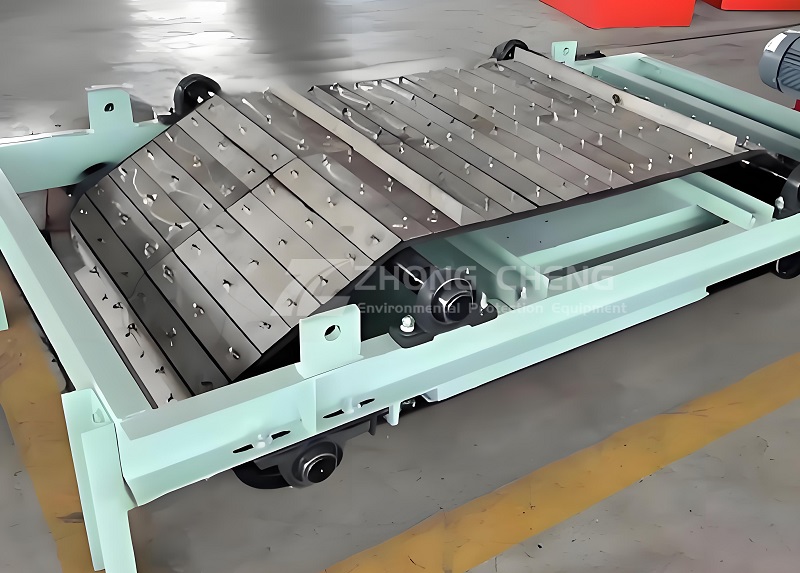
Equipment selection is the prerequisite for improving iron removal efficiency. If the type and performance of the selected iron separator do not match the material characteristics and production conditions, even with precise installation and maintenance, it will be difficult to achieve the ideal iron removal effect. Therefore, it is necessary to scientifically select a suitable iron separator based on core elements such as material properties, iron impurity characteristics, and production scale.
First, select the equipment based on material characteristics. Materials in different scenarios have significant differences in particle size, humidity, viscosity, and temperature, requiring targeted equipment selection. For waste sorting scenarios, where materials are complex in composition, high in moisture content, and contain a large amount of irregular impurities, a drum-type permanent magnetic separator or a high-power suspended electromagnetic separator is preferred. The former can operate synchronously with the belt conveyor, adapting to continuous operation needs, while the latter has a high magnetic field strength and can effectively attract small iron objects hidden in the waste; for granular materials such as coal and ore, if the material particle size is large (greater than 50mm), a suspended permanent magnetic separator can be selected, equipped with an automatic cleaning device to prevent impurity accumulation; if the material temperature is high (exceeding 100℃), a high-temperature resistant electromagnetic separator should be selected, whose coil uses high-temperature resistant insulation materials to prevent magnetic performance degradation due to high temperatures; for powdery or highly viscous materials, such as cement and flour, a pipeline-type magnetic separator should be selected, using a closed structure to prevent material blockage, while ensuring that the separator is compatible with the pipeline to ensure smooth material flow.
Secondly, the selection should be based on the characteristics of iron impurities. The size, shape, and distribution density of iron impurities directly affect the selection of the magnetic separator. If there are many large pieces of iron in the material (such as rebar and scrap mechanical parts), a suspended electromagnetic separator with high magnetic field strength and large adsorption area should be selected. Its magnetic field coverage is wide and can quickly attract large impurities; if small iron objects (such as nails and iron filings) are the main components, a permanent magnetic separator is preferred, as its magnetic field gradient is large, and its adsorption capacity for small impurities is stronger; if the distribution of iron impurities is uneven and the content fluctuates significantly, an intelligent adjustable electromagnetic separator can be selected. It uses sensors to monitor the iron content in real time and automatically adjusts the magnetic field strength, avoiding energy waste while ensuring the iron removal effect.
Finally, the selection should be based on the production scale. In large-scale production scenarios such as large waste treatment plants and mines, where material processing volume is high (averaging over 1000 tons per day), large-scale, automated iron separators are required, such as wide-belt drum-type iron separators or multiple suspended iron separators installed in parallel, to ensure that each batch of material is thoroughly decontaminated. For small production workshops or intermittent operation scenarios, small and medium-sized suspended permanent magnet iron separators can be selected. They are easy to install, have low operating costs, and can meet basic iron removal needs.
B. Scientific Installation: Optimizing Layout Parameters to Ensure Adsorption Effectiveness
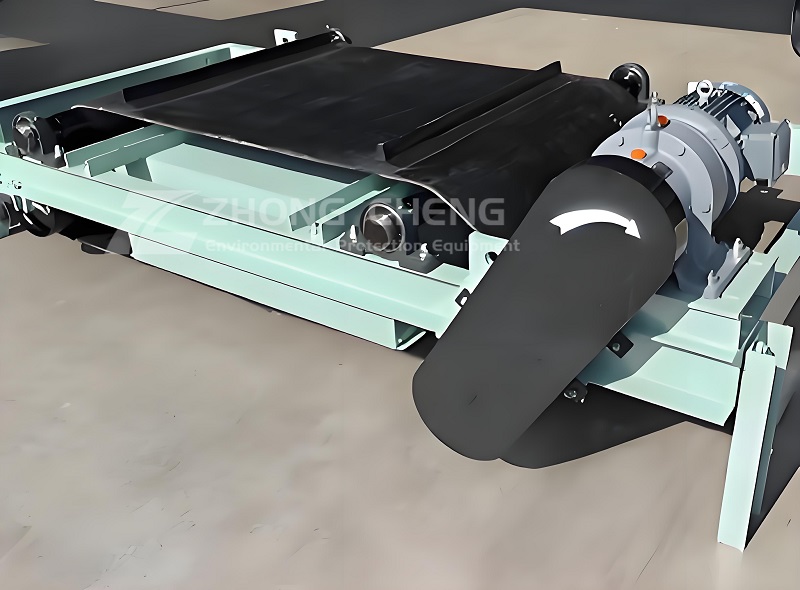
A reasonable installation layout and precise parameter adjustment are crucial to ensuring that the iron separator performs optimally. Many companies experience a decrease in iron removal efficiency of more than 30% due to improper installation. Common problems include unreasonable installation location, excessive adsorption distance, and equipment deviation from the centerline. Optimization is needed in three aspects: installation location, adsorption distance, and equipment calibration.
Optimizing the installation location is key to improving efficiency. The installation location of the iron separator must meet the principle of "pre-treatment and comprehensive coverage," prioritizing installation in the conveying section before the material enters the core processing equipment (such as screening machines, crushers, and incinerators) to remove iron from the source and prevent impurities from damaging subsequent equipment. For belt conveyor systems, the suspended iron separator should be installed in the middle section of the belt conveyor, where the material distribution is uniform and away from the belt rollers, avoiding interference from the roller's magnetic field. If the iron content in the material is high, a "multi-stage iron removal" layout can be adopted, installing the first-stage iron separator before the coarse screening to remove large pieces of iron, and the second-stage iron separator before the fine screening to remove small pieces of iron, ensuring iron removal accuracy. For pipeline conveying systems, the pipeline iron separator should be installed after the material pump and before the processing equipment, with a bypass pipe reserved to facilitate equipment maintenance without affecting normal production. During installation, ensure that the equipment centerline coincides with the pipeline centerline to prevent material from deviating to one side, resulting in incomplete iron removal.
Precisely adjust the adsorption distance and angle. The adsorption distance is a critical parameter affecting iron removal efficiency. Too large a distance results in rapid attenuation of the magnetic field strength, preventing effective iron removal; too small a distance may cause friction with the material or conveyor equipment, leading to equipment wear. The distance between the suspended iron separator and the belt surface needs to be adjusted according to the material thickness and magnetic field strength, usually controlled between 150-300mm. For every 50mm increase in material thickness, the distance needs to be reduced by 50mm to ensure the magnetic field can penetrate the material layer and adsorb iron objects; for drum-type iron separators, it is necessary to ensure that the drum surface is in close contact with the belt without gaps to prevent material from passing through the gaps and causing incomplete removal of impurities. In addition, for inclined belt conveyors, the iron separator needs to be installed at an angle, maintaining a 30-45° angle with the belt's direction of travel, increasing the contact time between the iron objects and the iron separator, and improving the adsorption probability.
Proper equipment calibration and environmental protection are also crucial. After installation, the iron separator needs to be calibrated to ensure that the centerline of the suspended iron separator coincides with the centerline of the belt conveyor, and that the drum of the drum-type iron separator is parallel to the direction of belt travel, preventing uneven material distribution leading to uneven impurity removal; at the same time, check the equipment's fixing, ensuring that the bracket welding is firm and the bolt connections are tight to prevent equipment displacement due to vibration during operation. For protection in complex environments, such as waste sorting and mining with high dust and humidity, dust covers and rain shelters should be added to the iron separator, and electrical components should be sealed to prevent dust and moisture from entering and causing malfunctions; in corrosive environments, the equipment surface should be coated with an anti-corrosion coating to extend the equipment's service life.
C. Standardized Operation: Optimizing Operating Parameters to Avoid Efficiency Degradation

The operation of the iron separator directly affects the iron removal efficiency. Standardized operating procedures and optimized operating parameters are necessary to avoid efficiency degradation due to improper operation.
Reasonable control of material conveying parameters is essential. The speed, thickness, and uniformity of material distribution during conveying affect the contact time and adsorption probability of iron objects with the iron separator. For belt conveyor systems, the belt speed should be controlled between 1.5-2.5 m/s. Too high a speed results in short contact time between the iron particles and the magnetic separator, leading to insufficient adsorption; too slow a speed affects production efficiency. The speed needs to be dynamically adjusted based on production requirements and the effectiveness of iron removal. The material thickness must be controlled within the effective adsorption range of the magnetic separator, usually not exceeding 1/2 of the effective penetration depth of the magnetic field. If the material thickness is too great, the belt height should be adjusted or a material dispersion device should be installed to ensure even distribution of the material, preventing localized accumulation that could hide iron particles within the material and prevent them from being adsorbed.
Optimize the operating parameters of the magnetic separator. For electromagnetic separators, the excitation current should be adjusted according to the iron content in the material. Increase the current to enhance the magnetic field strength when the iron content is high; decrease the current to reduce energy consumption when the content is low, avoiding coil overheating due to prolonged full-load operation. At the same time, regularly check the stability of the power supply voltage; voltage fluctuations should be controlled within ±5% to prevent unstable magnetic field strength due to abnormal voltage. For permanent magnet separators, the operating strategy should be adjusted according to the ambient temperature. In high-temperature environments, cooling should be enhanced to prevent demagnetization of the magnetic system. For automatic cleaning magnetic separators, the cleaning cycle should be set appropriately. In scenarios with high iron content, such as waste screening, the cleaning cycle can be set to every 30 minutes; in coal processing scenarios, it can be set to every 1-2 hours, ensuring that adsorbed iron particles are removed promptly to prevent accumulation from affecting subsequent adsorption.
Avoid external interference. The magnetic field of the magnetic separator is susceptible to interference from external strong magnetic fields and metal objects. During operation, ensure that there are no large metal components or electromagnetic equipment (such as welding machines, large motors) within 1.5m of the equipment to prevent external magnetic fields from overlapping or canceling out the magnetic field of the separator, leading to uneven magnetic field distribution. At the same time, do not place non-magnetic metal materials below the magnetic separator to avoid affecting the magnetic field penetration effect.
D. Meticulous Maintenance: Extending Equipment Life and Stabilizing Iron Removal Performance
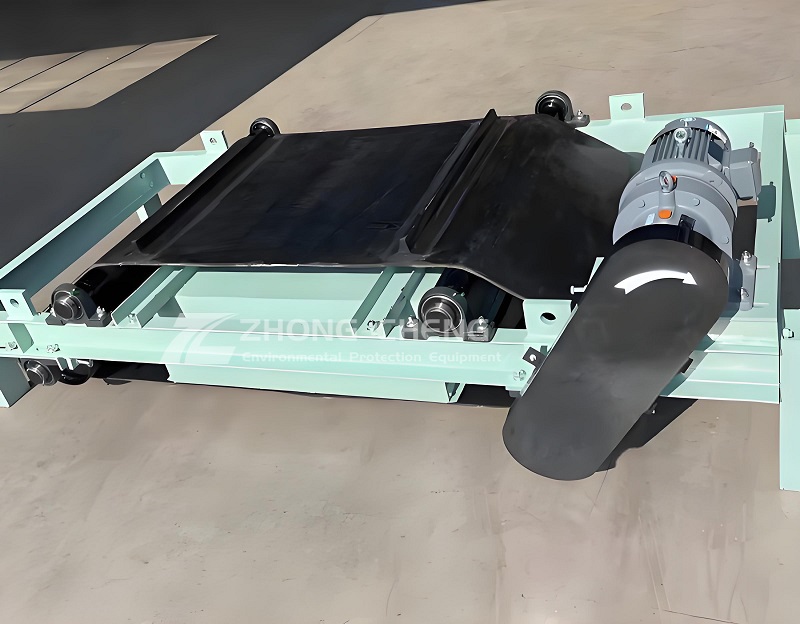
The quality of magnetic separator maintenance directly determines the stability of its iron removal efficiency. Long-term neglect of maintenance will lead to decreased magnetic performance and component wear, significantly reducing iron removal efficiency. A comprehensive maintenance system should be established, covering daily inspections, regular maintenance, and troubleshooting. Strengthen daily maintenance. Before starting the machine each day, check whether the main body, support, and connecting parts of the magnetic separator are intact and free from looseness or deformation; during operation, observe whether the equipment runs smoothly and without abnormal vibration or noise. For electromagnetic separators, check the coil cooling to prevent overheating; clean the dust, debris, and oil stains on the equipment surface daily, especially the magnetic system surface. If a large amount of impurities are attached to the magnetic system surface, it will form magnetic shielding and reduce the magnetic field strength, so it needs to be wiped clean with a soft cloth. Do not use hard objects to scratch the magnetic system. For manually cleaned magnetic separators, the adsorbed iron objects should be cleaned promptly during each shift; for automatically cleaned magnetic separators, check the operating status of the cleaning device (scraper, iron removal belt). If the scraper is worn or the belt is misaligned, adjust or replace it promptly.
Conduct regular inspections. Conduct a comprehensive inspection of the magnetic separator every month, focusing on testing the magnetic field strength. Use a Gauss meter to measure the magnetic field strength on the surface of the magnetic system. If the magnetic field strength of the permanent magnet separator decreases by more than 10%, remagnetize or replace the magnetic system promptly; for electromagnetic separators, measure the coil resistance value and compare it with the factory parameters. If the deviation exceeds 5%, troubleshoot the coil fault. Disassemble and inspect the equipment every quarter, replacing worn bearings, seals, and other vulnerable parts, and perform rust removal and anti-corrosion treatment on the support and rollers; for the electrical system, check the integrity of contactors, relays, fuses, and other components in the control cabinet, tighten loose terminals, and clean internal dust. Conduct a thorough maintenance once a year, comprehensively inspecting the magnetic system, coils, housing, and other core components of the magnetic separator, and evaluating the equipment performance. If there are irreparable faults, replace the equipment promptly.
Address common faults in a timely manner. If a decrease in iron removal efficiency occurs during operation, troubleshooting is required immediately: If the magnetic field strength is insufficient, it may be due to demagnetization of the permanent magnet separator, damage to the coil of the electromagnetic separator, or power supply failure. Targeted remagnetization, coil repair, or power supply stabilization are necessary. If the adsorbed iron particles easily detach, it may be due to an excessive adsorption distance or excessive material impact. The distance needs to be adjusted or a material buffering device should be installed. If the automatic cleaning device malfunctions, the drive motor and scraper position should be checked, and parts should be repaired or replaced promptly to ensure the smooth discharge of iron particles.
E. Technological Upgrades: Introducing Intelligent Technology for Efficiency Breakthroughs
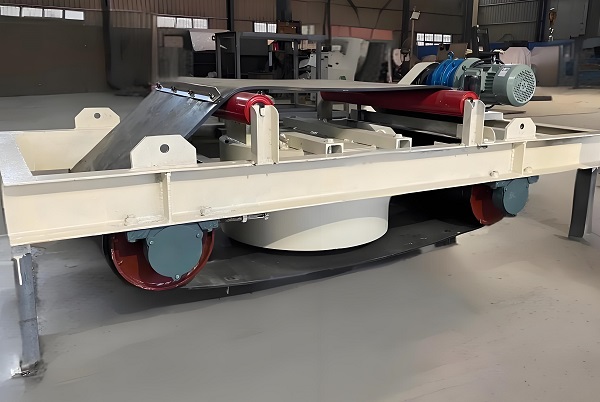
With the development of intelligent technology, upgrading traditional iron separators through technological advancements can achieve a leap in iron removal efficiency, especially suitable for large-scale, high-demand production scenarios.
Introduction of intelligent monitoring and control systems. Integrating sensors, IoT modules, and intelligent controllers into the iron separator system allows for real-time monitoring of data such as iron content in the material, magnetic field strength, and equipment operating status. This data is transmitted to the intelligent controller, which automatically adjusts parameters such as the magnetic field strength, cleaning cycle, and material conveying speed of the iron separator. For example, when the sensor detects a sudden increase in iron content in the material, the controller automatically increases the excitation current of the electromagnetic separator and speeds up the cleaning device to ensure timely removal of iron particles; when a decrease in magnetic field strength is detected, a warning signal is issued to remind staff to perform maintenance. In addition, through a remote monitoring platform, staff can view equipment operating data in real time and remotely control equipment start/stop and parameter adjustments, reducing on-site operating costs and improving management efficiency.
Adoption of high-efficiency magnetic systems and structural design. Traditional iron separators often use ordinary ferrite permanent magnets, which have limited magnetic field strength. These can be upgraded to rare earth permanent magnets (such as neodymium-iron-boron), which have a magnetic field strength 2-3 times that of ordinary permanent magnets, stronger adsorption capacity, stable magnetic properties, and a longer service life. In terms of structural design, a multi-pole magnetic system arrangement is used to increase the magnetic field gradient and improve the adsorption effect on fine iron particles; for suspended iron separators, the magnetic system distribution is optimized to make the magnetic field coverage more uniform and avoid dead zones; drum-type iron separators can use a built-in rotating magnetic system structure to create dynamic adsorption on the drum surface, improving iron removal efficiency. Achieving integrated equipment integration involves designing the magnetic separator as an integral part of other equipment such as screening machines, crushers, and conveyors, forming a collaborative operating system. For example, in a waste sorting line, the magnetic separator operates synchronously with the trommel screen. After the material is processed by the magnetic separator to remove impurities, it directly enters the screening machine, preventing secondary contamination. In mining operations, the magnetic separator is linked with the crusher. When the magnetic separator detects large pieces of iron, it automatically pauses the crusher's operation. Operation resumes after the iron is removed, protecting the crusher and improving iron removal efficiency. Furthermore, it can be used in conjunction with a metal detector to precisely locate the iron pieces, guiding the magnetic separator to focus its suction, further improving iron removal accuracy.
Improving the efficiency of magnetic separators is a systemic engineering process that requires considering multiple aspects, including equipment selection, installation and commissioning, operation, maintenance, and technological upgrades. Personalized solutions should be developed based on the specific characteristics of the application scenario. In actual production, companies need to fully understand their material characteristics and production needs, starting with basic selection and installation, standardizing daily operation and maintenance, and gradually introducing intelligent technologies for upgrades. This will ensure a stable improvement in iron removal efficiency, providing strong support for the safe and efficient operation of the production process. At the same time, it is necessary to pay attention to the development trends of magnetic separator technology, promptly adopt new technologies and equipment, and continuously optimize the iron removal system to achieve a balance between economic and environmental benefits.


Company: Zhengzhou ZhongCheng environmental protection equipment co., LTD

Company address: 36 xueyuan road, Zhengzhou City, Henan Province, China.

Whatsapp:+86-18738194110


Our Email

Our phone
 86-18738194110
 86-18738194110

Save Time! Get A Detailed Quotation Quickly.


 2026-04-22