Consulting
Service
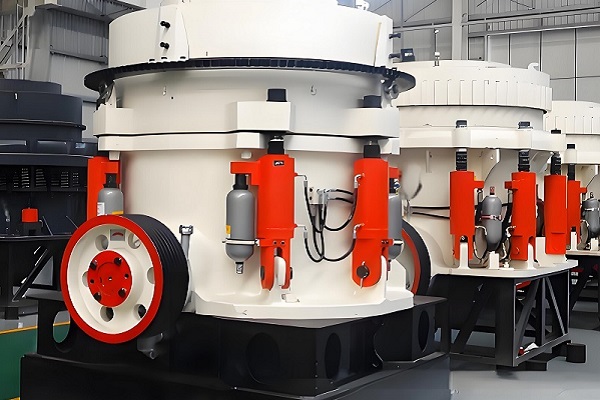
Cone crushers, with their large crushing ratio, uniform product particle size, stable operation, and suitability for high-hardness materials, have become a core medium and fine crushing equipment in waste resource utilization, especially suitable for the deep crushing of hard waste. As waste treatment moves towards reduction, resource utilization, and harmlessness, cone crushers can be integrated with coarse crushing equipment such as jaw crushers to complete the fine crushing of hard waste such as construction waste and industrial slag, solving the problem of large-scale waste disposal and promoting waste recycling and reuse. This article, combined with waste treatment scenarios, details the application scope, core advantages, practical operation points, and resource utilization value of cone crushers, providing a reference for efficient waste treatment operations.
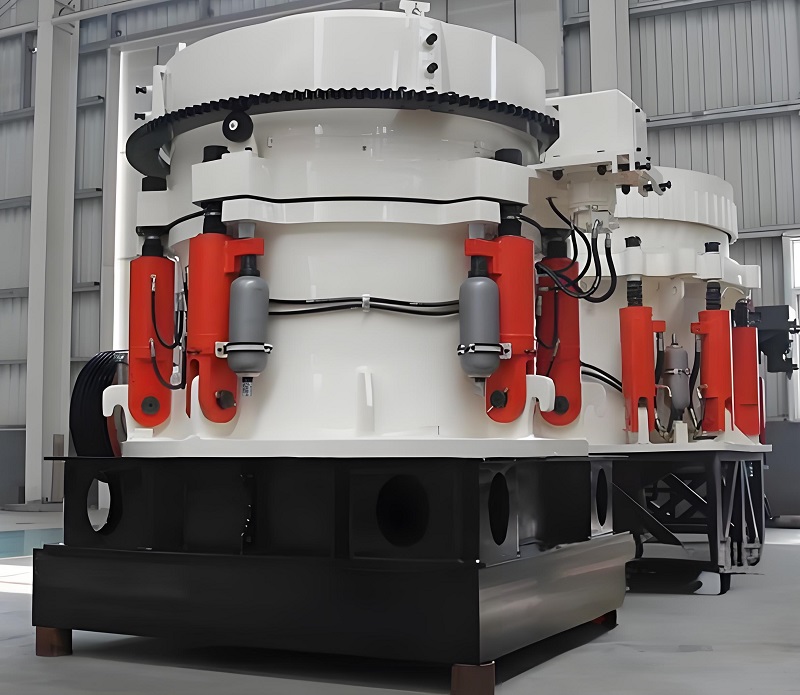
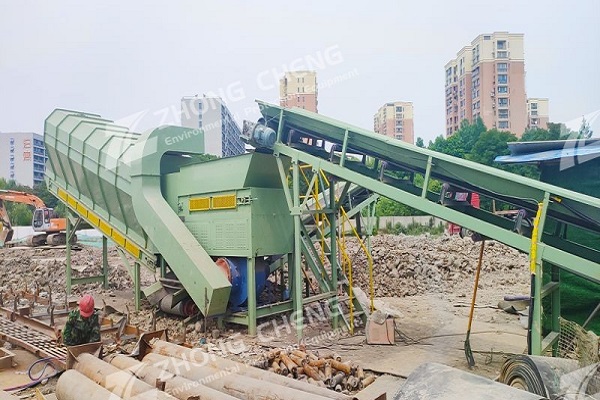
Construction waste disposal is a core application scenario for cone crushers in waste treatment, suitable for the medium and fine crushing of various hard construction wastes, contributing to the circular economy of building materials. Concrete blocks, cement blocks, brick and tile fragments, and asphalt waste generated from urban demolition, old building renovation, and road repairs, after coarse crushing by jaw crushers, require further crushing by cone crushers to refine the aggregate particle size, remove impurities, and improve the quality of recycled aggregates. Concrete blocks and cement blocks, after crushing and grading, can be processed into recycled aggregates of different specifications for the production of recycled concrete, recycled bricks, roadbed fillers, etc., replacing natural sand and gravel and reducing resource consumption; crushed brick and tile fragments and asphalt waste can be used for foundation filling and road subgrade paving, reducing the amount of construction waste landfill. With its adjustable discharge opening, the cone crusher can precisely control the particle size according to the use of recycled aggregates, meeting the specifications of different building materials production.
In industrial solid waste disposal, cone crushers are suitable for the fine crushing of high-hardness waste slag, contributing to the reduction and resource utilization of industrial waste. Waste rock, mine tailings, and tunnel slag generated from mining and processing are of high hardness and complex composition. After coarse crushing, they require medium and fine crushing treatment by cone crushers. After crushing, they can be reused as sand and gravel raw materials, improving the utilization rate of mine resources; slag and dross generated in the metallurgical industry can be used to manufacture building materials, road base materials, or as filter media for wastewater treatment, achieving resource utilization of waste slag. In addition, hard waste materials from the chemical industry, such as phosphate rock waste and discarded refractory materials, can be crushed and recycled using a cone crusher, reducing environmental pollution and improving resource recovery efficiency. Compared to other crushing equipment, cone crushers are wear-resistant and have a strong load-bearing capacity, making them suitable for continuous crushing of high-hardness industrial waste over long periods.
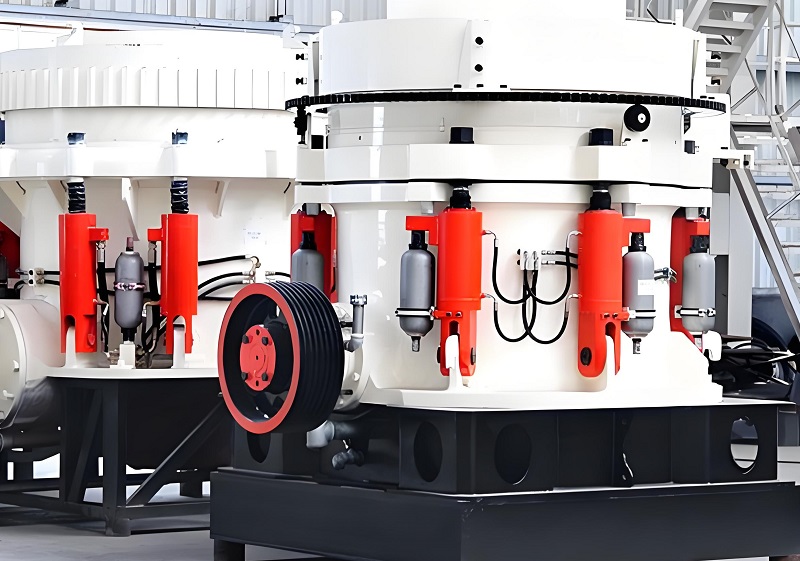
Some pre-treated municipal solid waste can be finely crushed using a cone crusher, expanding waste recycling options. Glass and ceramic waste, which are hard and non-adhesive, can be sorted to remove impurities and then coarsely crushed before being further processed by a cone crusher into fine particles. These particles can be used to produce recycled aggregates, building materials, or for the regeneration of glass and ceramic products, reducing the accumulation of municipal solid waste. Furthermore, discarded reinforced concrete prefabricated components and large construction waste can be coarsely crushed and then further processed by a cone crusher to separate out small reinforcing bars and crush the concrete into qualified recycled aggregates, achieving the separate recycling of steel and concrete and improving resource utilization. It is important to note that strict sorting is required before crushing municipal waste to thoroughly remove flexible materials such as plastics, rubber, and textiles to prevent entanglement with equipment components.
Cone crushers have significant application advantages in waste treatment, adapting to the complex working conditions of waste disposal while balancing efficiency and quality. Their advantages include:
1. High crushing ratio: It can crush large pieces of coarsely crushed waste to a uniform particle size, meeting the specifications for subsequent recycling and reuse, eliminating the need for multiple crushing steps and improving operational efficiency;
2. Stable operation: Using the principle of layered crushing, the materials are squeezed and crushed against each other during the crushing process, reducing the impact on equipment components and lowering the failure rate, making it suitable for continuous waste crushing operations;
3. Adjustable particle size: By adjusting the discharge opening size, the particle size of the crushed product can be precisely controlled, adapting to different uses of recycled waste resources, offering strong flexibility;
4. Good environmental performance: When used with dust removal and noise reduction equipment, it can reduce dust and noise pollution generated during the crushing process, meeting the harmlessness requirements of waste treatment and avoiding secondary pollution. To ensure the effective application of cone crushers in waste treatment, specific operational guidelines must be followed to prevent potential malfunctions. Before operation, equipment parameters should be adjusted according to the type and hardness of the waste to be crushed, ensuring optimal crushing performance. Thorough pre-treatment of the waste is crucial, including sorting and removing flexible materials and hard metal pieces to prevent equipment entanglement and component damage. During operation, uniform feeding is necessary, controlling the feeding speed and quantity to avoid overloading. The equipment's operating status should be closely monitored, paying particular attention to bearing temperature and the crushing chamber's operation. Blockages should be cleared promptly, and if any unusual noises or overheating occur, the machine should be stopped immediately for inspection. After operation, the equipment's surface and internal components should be cleaned of residual waste, and core components should be lubricated and inspected. Worn liners and crushing cones should be replaced regularly to extend the equipment's lifespan and ensure stable operation in subsequent tasks.
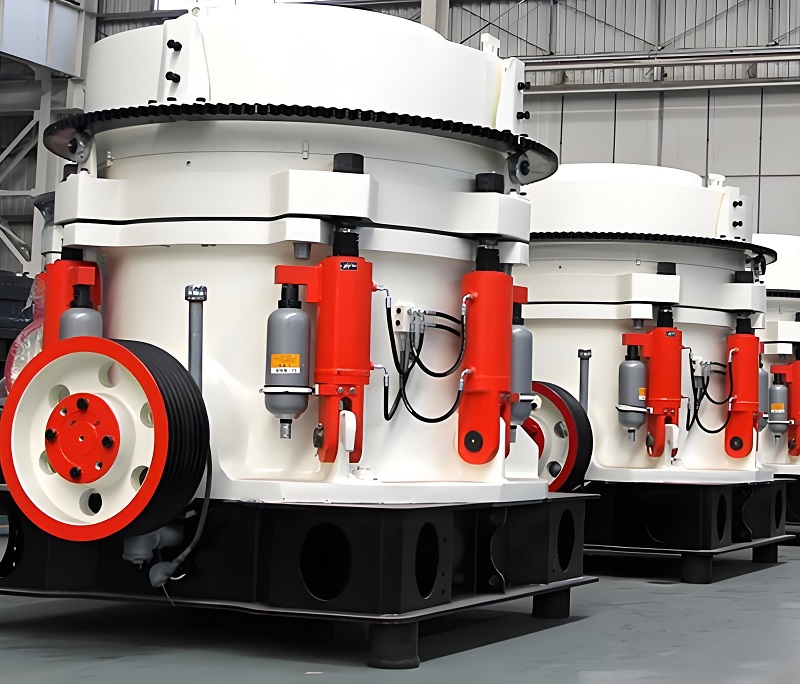
With the advancement of waste resource utilization policies, the application of cone crushers continues to expand, and their role in waste treatment is becoming increasingly prominent. They not only efficiently perform medium and fine crushing of various types of hard waste, promoting waste reduction, but also contribute to the conversion of waste into usable resources, reducing resource waste and environmental pollution, aligning with the concept of green development. In the future, in response to the diverse needs of waste treatment, cone crushers will be upgraded towards intelligence and environmental friendliness, optimizing crushing processes to suit different types of waste, further improving operational efficiency and resource utilization rates, and providing support for the development of the waste resource utilization industry.
Cone crushers, with their strong adaptability, high crushing efficiency, and uniform particle size, are widely used in the treatment of construction waste, industrial slag, and household hard waste, making them a key piece of equipment in promoting waste resource utilization. Through refined crushing operations, they achieve the reduction and resource utilization of various types of hard waste, reducing the pressure on landfills and incineration while increasing the value of resource recovery. Proper pre-treatment, operational control, and post-operation maintenance can maximize equipment efficiency, contributing to the high-quality development of the waste treatment industry and embodying the principles of green environmental protection and resource recycling.


Company: Zhengzhou ZhongCheng environmental protection equipment co., LTD

Company address: 36 xueyuan road, Zhengzhou City, Henan Province, China.

Whatsapp:+86-18738194110


Our Email

Our phone
 86-18738194110
 86-18738194110

Save Time! Get A Detailed Quotation Quickly.


 2026-04-22