Consulting
Service
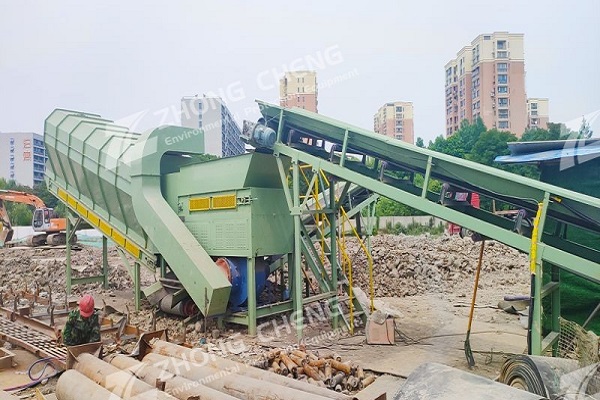
With the acceleration of urbanization, the annual production of urban household waste in China has exceeded 400 million tons, and the discharge of solid waste such as construction waste and industrial solid waste continues to rise. Garbage treatment has become a major issue related to ecological environment and people's livelihood security. In the entire chain of waste reduction, harmlessness, and resource utilization, screening is a key link that determines the efficiency and quality of subsequent processing. As the most widely used screening equipment, the drum screen plays a core role in waste screening and treatment with its unique working principle and stable performance, providing a solid guarantee for the efficient promotion of various links in waste treatment. This article will systematically analyze the important role of drum screens in garbage screening and processing from the dimensions of pre empowerment of the garbage disposal process, precise promotion of resource recycling, and effective control of processing costs.
1. Optimize the process: improve the "operational efficiency" of the garbage disposal system
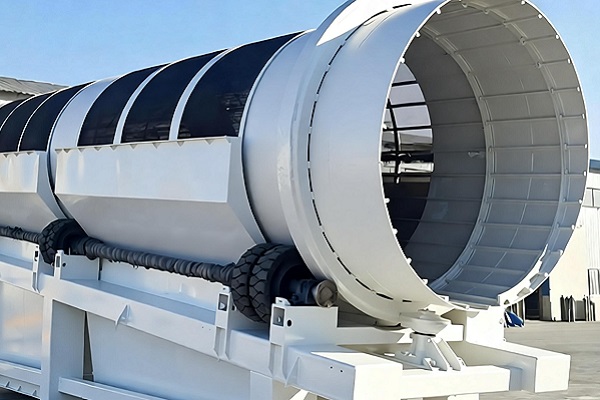
The garbage disposal system is an organic whole, and the coordinated operation of each link directly affects the overall processing efficiency. The drum screen effectively improves the operational efficiency of the entire garbage treatment system by optimizing material allocation and reducing equipment losses, becoming the "coordinator" for efficient system operation.
In the garbage incineration treatment system, the screening result of the drum screen directly determines the feed quality of the incinerator. The incinerator requires stable calorific value and uniform particle size of the feed material. If the material contains a large amount of large garbage or high-density hard objects, it can cause blockage of the feed inlet, jamming of the grate, and even cause temperature fluctuations in the furnace. After separating large garbage and hard objects, the drum screen controls the particle size of the materials entering the incinerator within a reasonable range (usually 10-100mm), while removing some small kitchen waste with high moisture content, improving the heating value of the feed. After the introduction of drum screens in a certain garbage incineration plant, the number of feed blockages in the incinerator decreased from 15 times per month to less than 3 times, the temperature fluctuation range of the furnace narrowed from ± 100 ℃ to ± 30 ℃, the incineration efficiency increased by 15%, and the emission of pollutants in the flue gas also significantly decreased. In addition, the high moisture kitchen waste separated by the drum screen can be subjected to anaerobic fermentation separately, achieving a synergistic treatment of "incineration+fermentation" and improving the energy recovery efficiency of the waste treatment system.
In landfill treatment, the screening effect of the drum screen can reduce the occupied space of the landfill and extend the service life of the landfill. The core resource of a landfill is the landfill storage capacity. If unscreened garbage is directly buried, a large amount of recyclable and biodegradable organic matter will occupy valuable storage capacity. The drum screen separates recyclables (such as metals and plastics) and biodegradable organic matter (such as kitchen waste), and only landfills inert materials (such as bricks and ceramics) that cannot be recycled, which can reduce landfill volume by 40% -50%. At the same time, the separated biodegradable organic matter is composted or fermented to avoid the generation of large amounts of leachate and methane gas in landfills, reducing the environmental risks of landfills. According to data from a landfill site in a certain city, the introduction of drum screens for pre-treatment has extended the expected service life of the landfill site from 15 years to 28 years, reduced leachate production by 35%, and increased methane recovery by 20%, achieving sustainable operation of the landfill site.
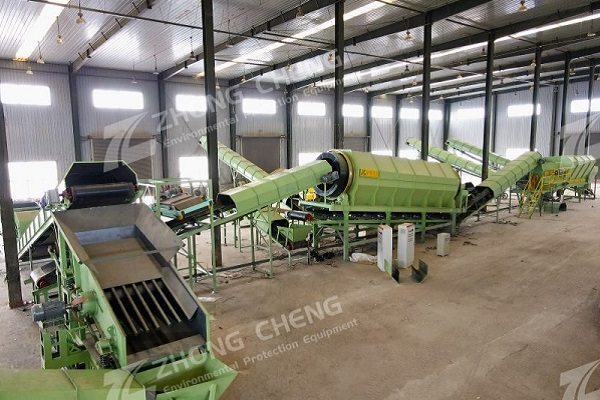
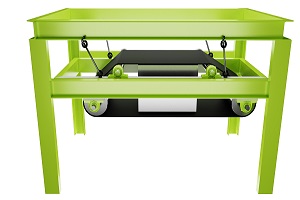
In the automated production line of garbage disposal, the continuous operation capability of the drum screen provides support for the automated operation of the system. The drum screen adopts a continuous feeding and screening working mode, which can seamlessly connect with conveyor belts, sorting robots, magnetic separators and other equipment to form an automated screening production line. Compared with traditional manual screening, the processing efficiency of automated production lines is improved by 5-10 times, and the screening accuracy is more stable. For example, in the automated screening production line of a large garbage treatment plant, the drum screen can process 150 tons of garbage per hour. The screened materials are directly transported to the subsequent processing equipment through a conveyor belt, and the entire process only requires 2-3 operators to monitor, greatly reducing labor costs and improving the system's operational efficiency.
2. Controlling costs: reducing the "economic and environmental costs" of waste disposal
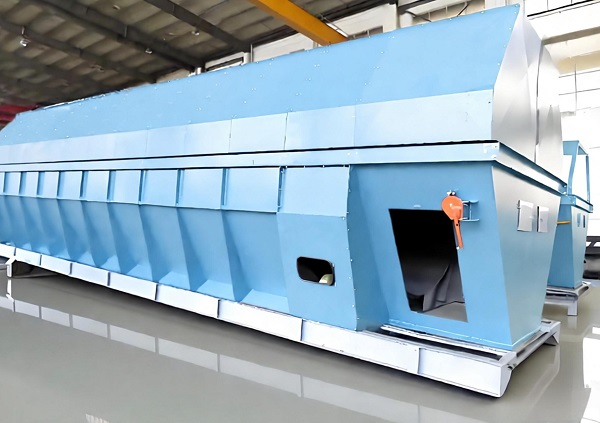
The cost of garbage disposal includes multiple aspects such as equipment purchase, operation and maintenance, and environmental governance. The drum screen improves processing efficiency, reduces equipment loss, and lowers environmental risks, controlling garbage disposal costs from multiple dimensions and creating dual economic and environmental benefits for garbage disposal enterprises.
In terms of equipment maintenance cost control, the screening function of the drum screen can effectively protect the subsequent processing equipment. Hard objects and impurities in garbage are the main causes of wear and failure of crushing equipment, incinerators, fermentation tanks, and other equipment. The drum screen separates these harmful substances in advance, reducing the wear and tear of subsequent equipment and extending its service life. Taking crushing equipment as an example, garbage that has not been pre treated by a drum screen is directly fed into the crusher. The service life of the crusher's hammer head is usually 1-2 months, while after removing hard objects through a drum screen, the service life of the hammer head can be extended to 6-8 months, reducing equipment maintenance costs by more than 60%. At the same time, the drum screen has a simple structure, few moving parts, and low maintenance costs. Its annual maintenance cost is only 10% -15% of the maintenance cost of subsequent processing equipment, making it the "king of cost-effectiveness" in controlling the overall equipment maintenance cost.
In terms of operating cost control, the efficient screening capacity of the drum screen reduces the energy and material consumption of subsequent processing. In garbage incineration, the material purified by the drum screen has a higher calorific value, and the consumption of combustion aids (such as diesel) in the incinerator is reduced by 20% -30%; In composting treatment, the screened material undergoes more complete fermentation without the need for additional conditioning agents (such as straw and sawdust), reducing the consumption of conditioning agents by more than 40%. In addition, the drum screen adopts high-efficiency energy-saving motors, which reduces energy consumption per unit processing capacity by 15% -20% compared to traditional screening equipment. Long term operation can save a lot of electricity expenses. According to statistics from a certain garbage treatment plant, the introduction of drum screens has reduced the unit operating cost of the entire treatment system from 120 yuan per ton to 85 yuan, saving over 5 million yuan in annual operating costs.
In terms of environmental cost control, the screening effect of the drum screen reduces pollutant emissions during the garbage disposal process and lowers the cost of environmental governance. In garbage incineration, the plastic, paper and other materials removed by the drum screen are incinerated separately, which can reduce the generation of pollutants such as dioxins; In landfill treatment, the biodegradable organic matter separated by the drum screen is centrally processed, reducing the production of leachate and methane in the landfill site, and lowering the cost of leachate treatment and methane recovery. At the same time, the dust cover and spray dust reduction system equipped on the drum screen can effectively control dust pollution during the screening process, avoiding environmental fines caused by excessive dust. In addition, the utilization of waste resources promoted by drum screens can enable waste treatment enterprises to obtain additional income by selling recyclable materials, recycled aggregates, biogas and other products, further offsetting the cost of waste treatment and achieving a "win-win situation of environmental and economic benefits".
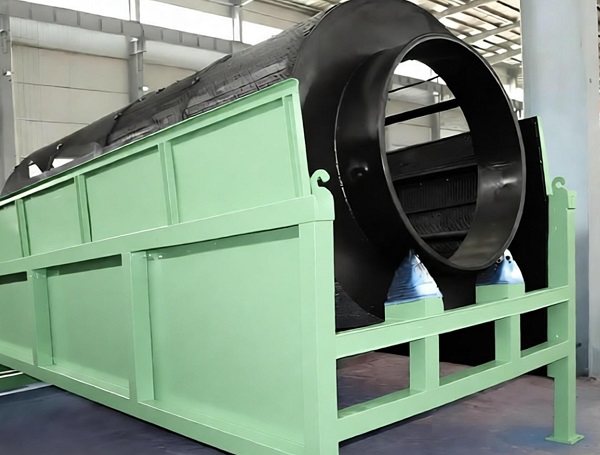
From pre screening of garbage disposal, to precise grading of resource recycling, to efficiency optimization and cost control of treatment systems, drum screens play multiple core roles in garbage screening and processing, becoming the "bridge" connecting garbage collection and final treatment. Its role is not only reflected in improving the processing efficiency of a single link, but also in promoting the development of the entire waste treatment system towards "high efficiency, energy conservation, environmental protection, and resource utilization". With the deepening of garbage classification policies and the continuous upgrading of garbage treatment technology, drum screens will also usher in new development opportunities. By integrating advanced technologies such as intelligent control and modular design, the screening accuracy and operational stability will be further improved. In the future of garbage disposal, drum screens will continue to play an important role, providing stronger support for achieving the goal of building a "waste free city" and promoting the development of ecological civilization.


Company: Zhengzhou ZhongCheng environmental protection equipment co., LTD

Company address: 36 xueyuan road, Zhengzhou City, Henan Province, China.

Whatsapp:+86-18738194110


Our Email

Our phone
 86-18738194110
 86-18738194110

Save Time! Get A Detailed Quotation Quickly.


 2026-04-22