Consulting
Service
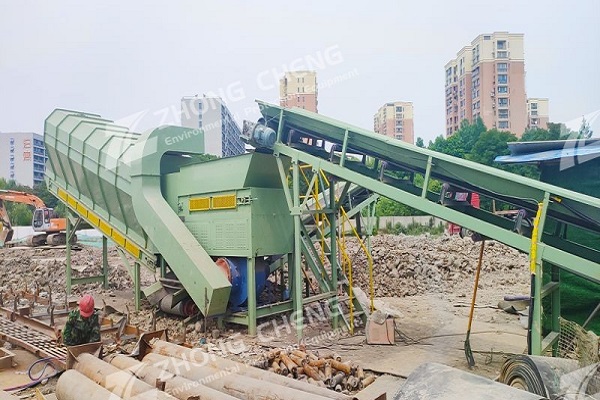
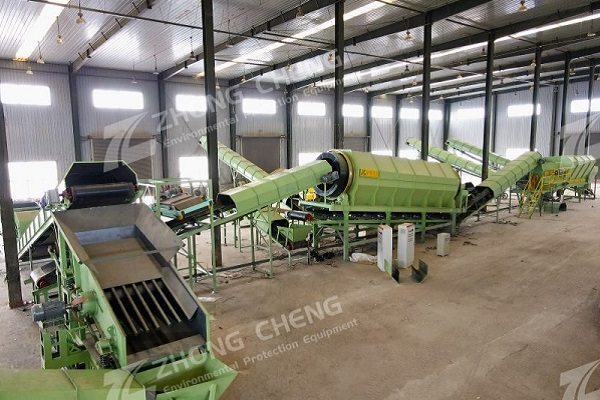
Construction waste screening systems are core equipment for the resource utilization of construction waste. Their core function is to separate mixed construction waste into recyclable components such as recycled aggregates, metals, and lightweight materials through a collaborative operation of "grading screening + multi-media sorting," ultimately achieving harmless disposal and high-value recycling. This system is not a single piece of equipment, but an integrated production line composed of six modules: pretreatment, core screening, auxiliary sorting, conveying and connection, and environmental protection and electrical control. These modules work closely together to form a complete process chain of "feeding - impurity removal - grading - purification - finished product collection." The following analysis, combining fixed and mobile configurations, details the machine composition, core functions, and key technical parameters of each module.
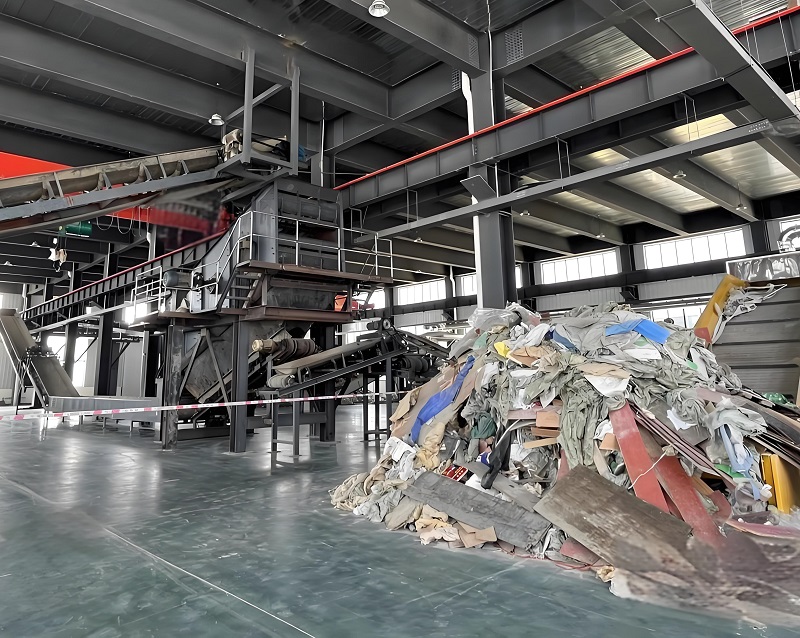
A. Pretreatment Module: Source Control of Impurities, Ensuring Stability of Subsequent Processes
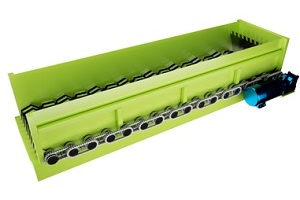
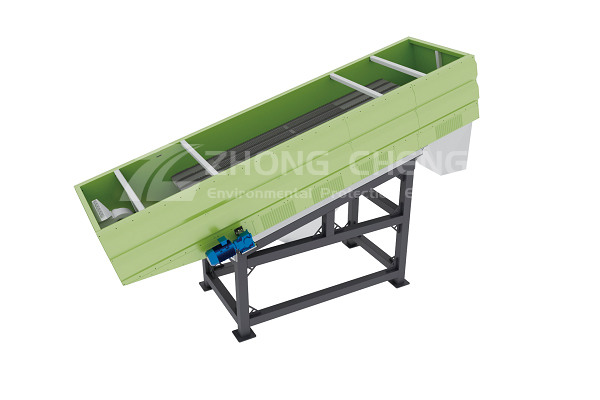
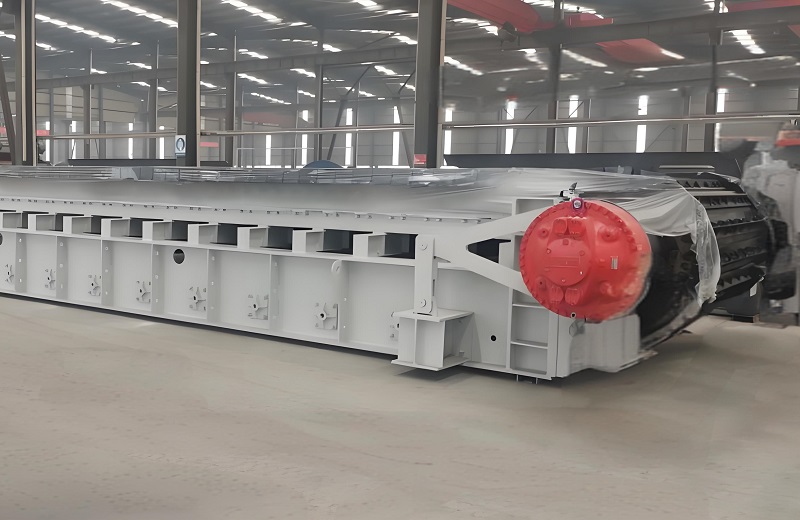
Pretreatment is the "first line of defense" of the screening system. Its core function is to remove uncrushable impurities and pre-grade the particle size of raw materials, preventing large pieces of material or foreign objects from damaging subsequent equipment and improving overall processing efficiency. This module mainly consists of feeding equipment, a pre-screening device, and a manual sorting table, and is a crucial link connecting raw materials to the core system. 1. Feeding and Loading Equipment: The mainstream configuration is a heavy-duty plate feeder or a bar vibrating feeder, replacing the traditional loader for direct feeding and achieving uniform and quantitative feeding. The plate feeder is suitable for demolition waste with a particle size ≤1000mm, equipped with wear-resistant manganese steel chain plates and anti-deviation devices, and can withstand the impact of reinforcing bars and concrete blocks. The bar vibrating feeder has built-in grading bars, which can pre-screen out fine soil (reclaimed soil) of 0-10mm, reducing the load on subsequent screening. Its processing capacity is typically 60-200t/h, and the motor power is 15-37kW.
2. Pre-screening Device: The core is a heavy-duty drum screen or bar screen, linked to the feeder. The rotary drum screen features a shaftless design to avoid steel bar entanglement. The screen openings are graded in 10mm and 20mm sizes, separating large pieces of wood, plastic, and other lightweight debris. The bar screen controls the pre-screening particle size by adjusting the bar spacing, adapting to the different characteristics of demolition and construction waste, achieving a pre-screening efficiency of over 85%.
3. Manual Sorting Table: Located above the pre-screening discharge conveyor belt, this open-style operating table is equipped with lighting, safety railings, and a material collection box. Operators can manually remove large pieces of steel bars, rock wool, glass wool, and hazardous waste. This is an important supplement to ensuring the purity of recycled aggregates. Typically, 2-4 people are required, with a sorting efficiency of approximately 50-80 t/h.
B. Core Screening Module: The core of grading, achieving precise aggregate particle size separation. The core screening module is the "heart" of the entire system. Based on the differences in material particle size, it separates the crushed material into recycled aggregates of different specifications, directly determining the quality of the finished product. Mainstream equipment includes circular vibrating screens, drum screens, and probability screens, available in single-layer, double-layer, or multi-layer designs to suit different process scenarios.
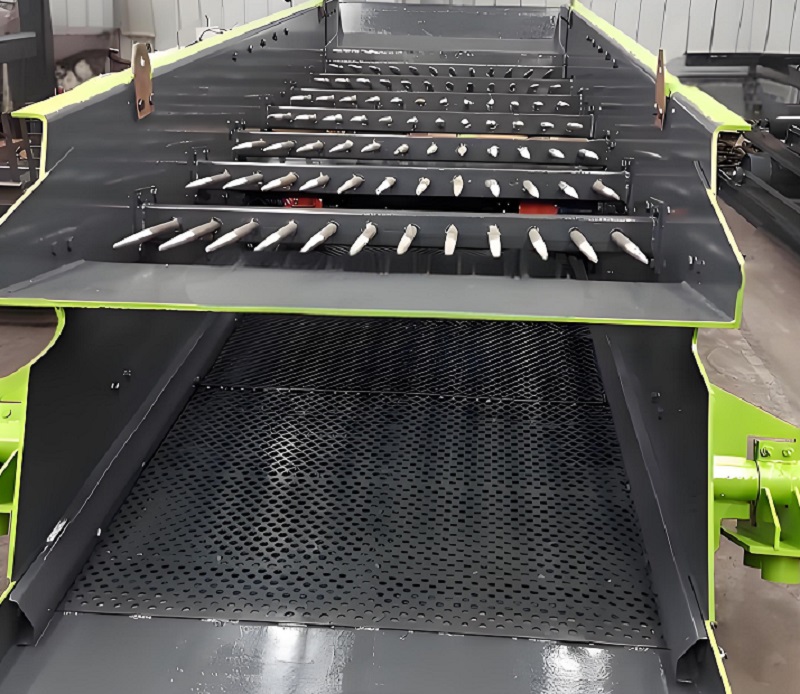
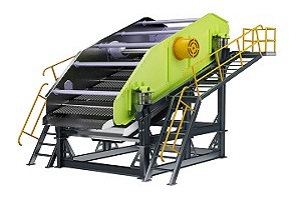
1. Circular Vibrating Screen: The preferred equipment for stationary production lines, employing a double eccentric shaft vibrator, the screen surface vibrates along a linear trajectory, resulting in high screening efficiency and large throughput. Commonly used are double-layer or triple-layer designs with screen apertures of 5mm, 10mm, and 25mm, capable of producing three core recycled aggregates (0-5mm, 5-10mm, and 10-25mm) in a single pass. Some models include a 31.5mm screen layer to meet special engineering requirements. Key parameters: screen area 10-20㎡, processing capacity 80-150t/h, motor power 7.5-18.5kW, screen mesh made of wear-resistant polyurethane material, with a service life 3-5 times longer than traditional metal screens.
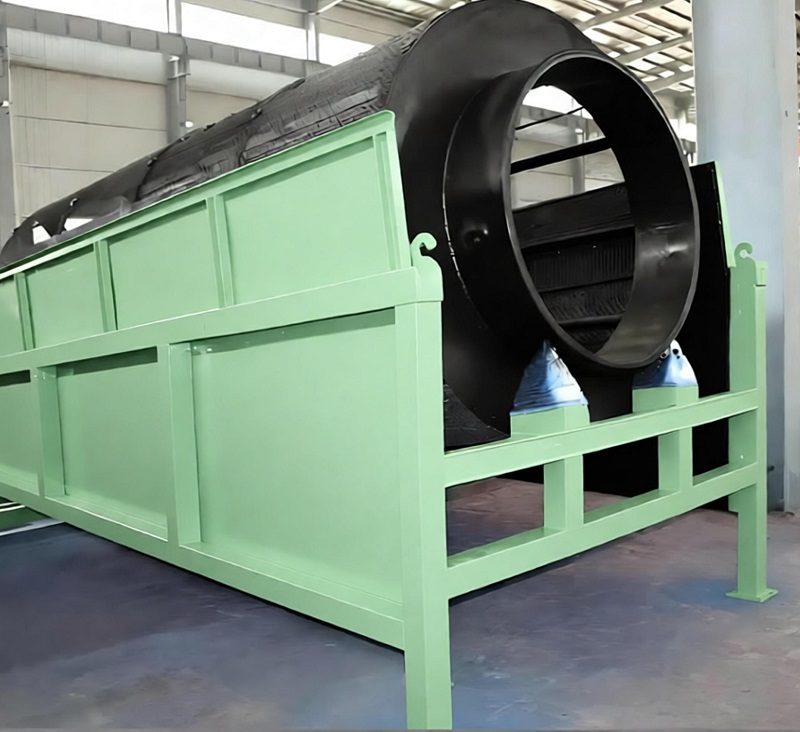
2. Rotary Cylinder Screen: The core component of a mobile screening station, available in shafted and shaftless versions. Suitable for construction waste with high powder content and prone to clogging. The shaftless rotary cylinder screen uses a rotating cylinder to tumble the material, with screen holes arranged from largest to smallest along the cylinder's length, achieving multi-stage screening and preventing entanglement of reinforcing bars and fabric strips. The shafted rotary cylinder screen is suitable for materials with uniform particle size, with a processing capacity of 50-120 t/h, a cylinder diameter of 1.5-2.0 m, and a length of 4-6 m.
3. Probability Screen: Specialized equipment for high-powder construction waste, utilizing the principle of "probability screening." It achieves rapid grading through multiple layers of inclined screen surfaces, effectively solving the problem of fine powder clogging. The screen surface uses high-frequency, low-amplitude vibration, increasing processing capacity by 30% compared to traditional vibrating screens. Suitable for fine screening of 0-5 mm recycled fine aggregate, achieving a powder removal rate of over 90%.
C. Auxiliary Sorting Module: Multi-media Purification for Comprehensive Resource Recovery
The auxiliary sorting module, based on differences in the magnetic properties, density, and conductivity of materials, deeply purifies the screened materials, recovering valuable resources such as metals and light materials, and reducing the impurity content of recycled aggregates. Core equipment includes magnetic separators, air separators, and eddy current separators; some high-end production lines are equipped with near-infrared optical separators.
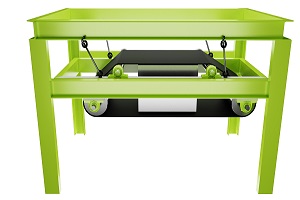
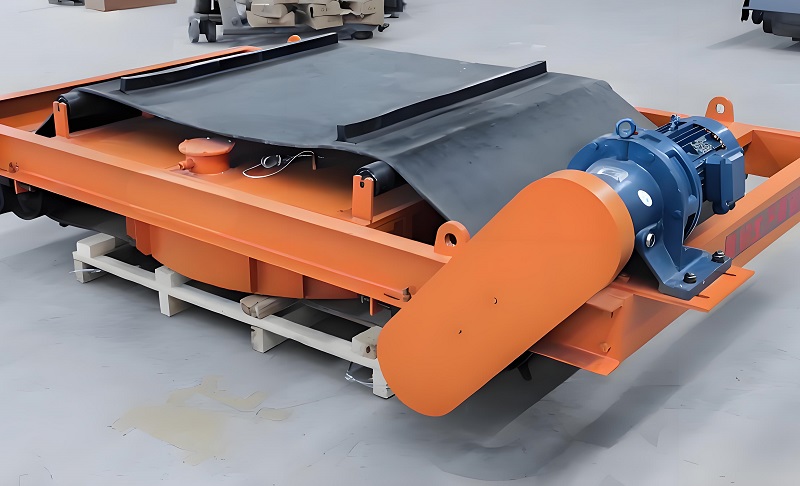
1. Magnetic Separation Equipment: Used to recover ferromagnetic materials (steel bars, nails, etc.). The mainstream configurations are suspended permanent magnet separators and drum magnetic separators. Suspended magnetic separators are installed above the conveyor belt, using a strong magnetic field to adsorb iron from the material. Iron is unloaded manually or automatically; the magnetic field strength is ≥12000Gs. Drum magnetic separators replace the conveyor belt drum with a magnetic drum. During material discharge, iron is adsorbed and rotated to the side of the drum for discharge. Suitable for removing trace iron impurities from fine aggregates, with an iron removal efficiency ≥98%.
2. Air Separation Equipment: Separates lightweight impurities (plastics, wood chips, paper scraps, etc.), divided into box-type air separators and folding plate air separators. Box-type air separators utilize negative pressure airflow to draw lightweight materials from the material and collect them through a cyclone separator, achieving a removal rate of 89.5% for wood chips and soft plastics. Folding plate air separators use multi-stage folding plates to guide the flow, utilizing the difference in material settling velocity to separate heavy lightweight materials such as hard plastics and wood blocks, achieving a removal rate ≥92%, a processing capacity of 30-80 t/h, and a motor power of 7.5-15 kW.
3. Eddy Current Separator: Used for recovering non-ferrous metals (aluminum, copper, zinc, etc.), installed on fine aggregate conveying lines. The equipment generates eddy currents through a high-frequency magnetic field, inducing currents in non-ferrous metal particles, which are then deflected from the material flow by the Lorentz force, achieving separation from the aggregate. The separation efficiency is ≥95%, suitable for recovering non-ferrous metals from construction waste.
4. Deep Sorting Equipment: High-end production lines are equipped with near-infrared optical sorters and robotic sorting stations. Near-infrared optical sorters use spectral recognition technology to accurately identify organic materials such as plastics and wood, which are then removed by an air jet device, achieving a debris removal rate of ≥96.9%. Robotic sorting stations utilize visual recognition and robotic arms to automatically sort complex debris, replacing manual labor and improving sorting efficiency and safety.
D. Conveying and Connecting Module: The "Blood Vessels" of Material Flow The conveying module is responsible for material transfer between various devices, ensuring continuous operation of the production line. The core equipment is a belt conveyor, equipped with connecting devices such as chutes and hoppers, adaptable to different layout requirements for both fixed and mobile systems.
1. Belt Conveyor: Classified by purpose into main conveyor, auxiliary conveyor, and return conveyor. The conveyor belt is made of wear-resistant rubber and equipped with anti-deviation, anti-tear, and speed monitoring protection devices. The main conveyor has a conveying capacity of ≥120% of the processing line's maximum capacity, with a bandwidth of 500-1000mm. The return conveyor sends oversized materials (e.g., aggregates >31.5mm) back to the crusher, forming a closed-loop cycle and improving raw material utilization.
2. Connecting Devices: The chutes feature a wear-resistant design with internal rubber linings to reduce material impact and dust leakage. The finished product silos are divided into aggregate, metal, and light material silos, designed for 1-3 hours of production capacity, equipped with level gauges and unloading gates for quantitative loading. The silo bottoms feature a conical design to prevent material bridging.
E. Environmental Protection and Electrical Control Module: Compliant Operation, Intelligent Management
The environmental protection and electrical control module ensures stable and compliant operation of the production line, encompassing dust control, noise control, and intelligent control systems to ensure compliance with national environmental standards and modern production requirements.
1. Dust Control Equipment: The core components are baghouse dust collectors and dry fog dust suppression systems. 1. Bag Collector: Installed at the crushing, screening, and conveying material drop points, the baghouse dust collector filters dust through filter bags, achieving a dust removal efficiency of ≥99% and an organized emission concentration of <20mg/m³. The dry fog dust suppression system sprays micron-level water mist at the material drop points and along the conveyor belt to suppress dust diffusion, suitable for open work areas.
2. Noise Control Equipment: The crushing and screening equipment uses enclosed machine rooms lined with sound insulation cotton. The conveyor chutes are wrapped with rubber and plastic sponge to reduce material impact noise. Fans and motors are equipped with vibration-damping bases to ensure boundary noise <70dB(A), complying with GB12348-2008 standards.
3. Intelligent Control System: Composed of a PLC control cabinet, touchscreen, and sensors, it achieves fully automated control of the entire line. Operators can set the feed rate, screening frequency, and sorting parameters via the touchscreen, and monitor the equipment's operating status, capacity, and finished product quality in real time. Sensors (level gauges, vibration sensors, and temperature sensors) provide fault warnings and automatic shutdown, reducing labor costs and improving production safety. Mobile production lines are additionally equipped with diesel generator sets to achieve self-sufficient power supply.
F. Configuration Differences Between Fixed and Mobile Systems Construction waste screening systems are divided into two main types: fixed and mobile. Their machine configurations are optimized and adjusted according to application scenarios: Fixed production lines are suitable for large-scale resource recovery bases, with complete configurations and a processing capacity of 500,000 to 1,000,000 tons/year. The core components are a jaw crusher + impact crusher + multi-layer circular vibrating screen + multi-stage sorting. Mobile production lines integrate the core equipment on tracked or wheeled chassis, suitable for on-site disposal at demolition sites. They have a compact configuration, with the core components being a mobile crushing station + mobile screening station + simple sorting device. They are flexible and reduce transportation costs, with a processing capacity of 50 to 150 tons/hour.
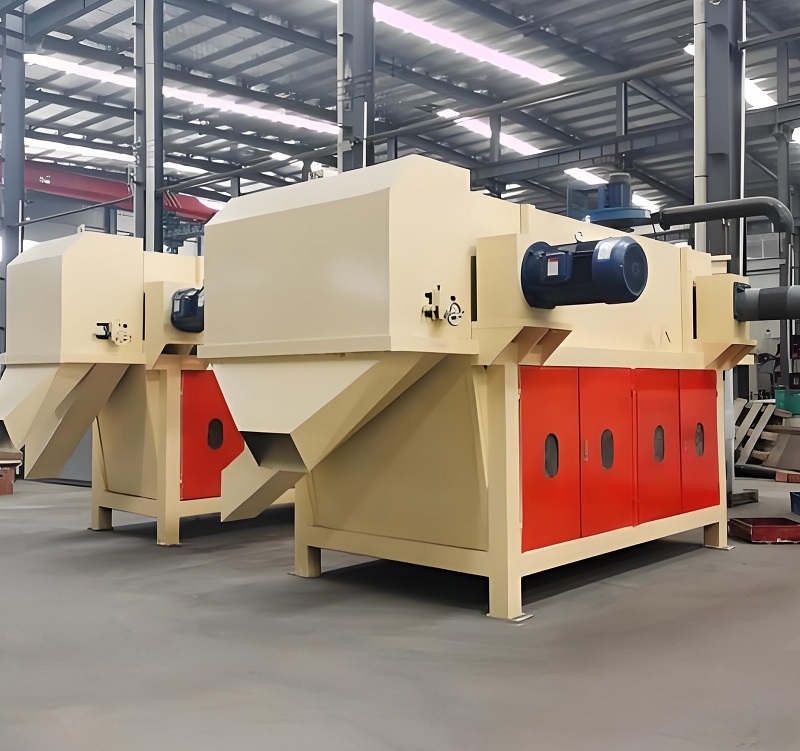
The machine configuration of construction waste screening systems revolves around two core aspects: "grading" and "purification." Through the coordinated operation of six modules, it achieves the harmlessness, reduction, and resource recovery of construction waste. In practical applications, equipment models and configurations should be flexibly matched according to the type of raw materials (demolition waste/construction waste), processing scale, and finished product requirements to ensure the efficiency and economy of the production line and provide solid equipment support for the production of recycled aggregates and recycled building materials.


Company: Zhengzhou ZhongCheng environmental protection equipment co., LTD

Company address: 36 xueyuan road, Zhengzhou City, Henan Province, China.

Whatsapp:+86-18738194110


Our Email

Our phone
 86-18738194110
 86-18738194110

Save Time! Get A Detailed Quotation Quickly.


 2026-04-22