Consulting
Service
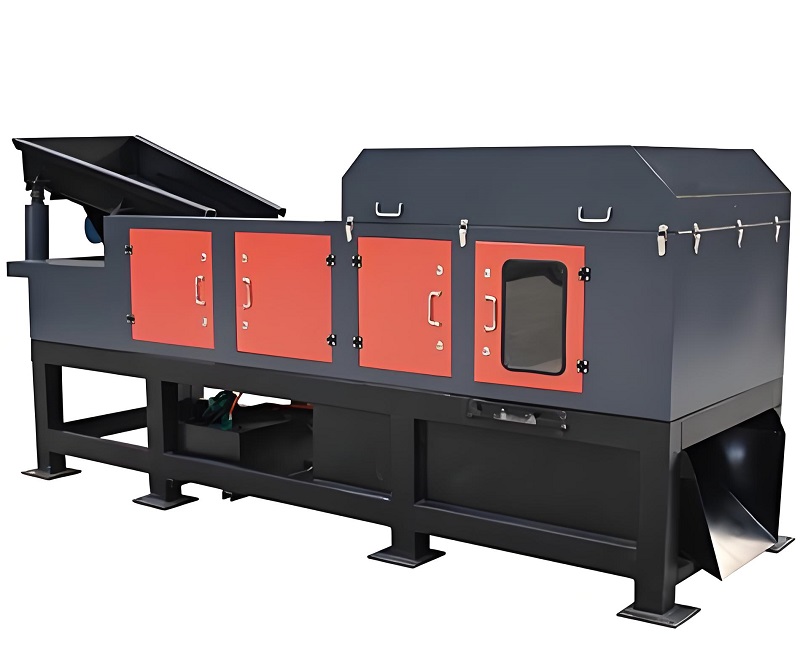
In fields such as resource recycling, solid waste treatment, and non-ferrous metal regeneration, efficient and precise material sorting equipment is the core support for achieving resource utilization and cost reduction. Eddy current separators, as specialized sorting equipment developed based on the principle of electromagnetic induction, have become the mainstream equipment for non-magnetic non-ferrous metal sorting due to their unique sorting mechanism and stable operating performance. They effectively solve the industry pain points of difficult separation and low recovery efficiency of non-ferrous metals in mixed materials. Requiring no chemical reagents or wet processes, they complete the sorting through purely physical methods, aligning with the concept of green and environmentally friendly development while significantly improving resource recovery rates. They play an irreplaceable role in scenarios such as industrial solid waste treatment, renewable resource recycling, and refined disposal of municipal solid waste. The following section will elaborate on their core functions and outstanding features.
A. Core Function of Eddy Current Separators
The core working principle of eddy current separators is based on electromagnetic induction and Lorentz force. A high-speed rotating magnetic roller inside the equipment generates a high-frequency alternating magnetic field. When a mixture containing non-magnetic non-ferrous metals passes through the magnetic field area, eddy currents are instantaneously induced within the metal. The secondary magnetic field formed by these eddy currents repels the original alternating magnetic field, thus exerting a pushing force on the non-ferrous metals and separating them from non-metallic and magnetic materials. This core principle determines its diverse practical value.
1. Achieving efficient separation and recovery of non-magnetic non-ferrous metals is the most crucial function of the equipment. It primarily targets non-magnetic conductive metals such as copper, aluminum, zinc, tin, gold, and silver, accurately separating and extracting them from mixtures. It is widely applicable to materials such as scrap from dismantled automobiles, electronic waste, scrap cables, plastic mixed with metals, municipal solid waste incineration tailings, and industrial waste residue. Whether in block, flake, or granular form, non-ferrous metals with electrical conductivity can be effectively sorted, solving the problems of low efficiency, high cost, and incomplete sorting associated with traditional manual sorting. This helps enterprises achieve large-scale, refined recycling of non-ferrous metals, turning waste resources into valuable resources. For example, in the dismantling of waste household appliances and the processing of circuit boards, it can efficiently extract precious metals such as copper and aluminum; in the recycling of waste plastics, it can remove mixed metal impurities, improving the purity of recycled plastics.
2. Optimizing material purification effects and facilitating subsequent processing. If non-ferrous metals mixed in solid waste are not separated in advance, they will seriously affect the quality of subsequent crushing, smelting, and granulation processes, and may even damage processing equipment and reduce the quality of recycled products. Eddy current separators can remove non-ferrous metals from materials in advance, achieving complete separation of non-metallic materials from non-ferrous metals. This protects subsequent processing equipment from wear by hard metal objects, improves the purity of recycled materials, lays the foundation for subsequent resource-based processing, effectively extends the solid waste treatment industry chain, and improves overall disposal efficiency.
3. Supporting green environmental protection and resource recycling, aligning with dual-carbon development goals. Traditional solid waste disposal methods often involve landfilling and incineration, which not only waste non-ferrous metal resources but also cause soil and air pollution. Eddy current separators, through dry physical separation, require no water or chemical additives throughout the process, eliminating secondary pollution such as wastewater, waste gas, and waste residue. This reduces the amount of solid waste going to landfills, lowers environmental governance pressure, and enables the recycling of non-ferrous metals, reducing primary mineral mining, alleviating resource shortages, and contributing to the construction of a green, low-carbon circular economy system. It is a key piece of equipment for environmentally friendly solid waste treatment.
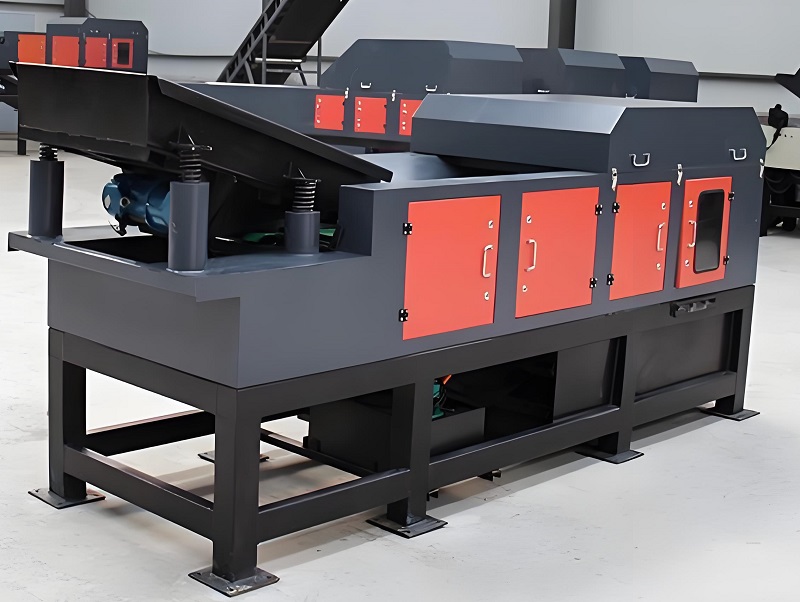
4. Adapting to automated production lines, enhancing industry intelligence. Modern eddy current separators can flexibly connect to various crushing, conveying, and screening production lines, achieving continuous and automated separation operations. This eliminates the need for extensive manual operation, significantly reducing labor intensity and labor costs. Meanwhile, the equipment is adaptable to large-scale production needs, and its processing capacity can be flexibly adjusted according to working conditions. It can meet the production needs of small and medium-sized recycling and processing enterprises as well as the large-scale operations of large solid waste treatment bases, promoting the transformation of the resource recycling industry from extensive processing to refined and intelligent processes.
B. Core Features of Eddy Current Separators
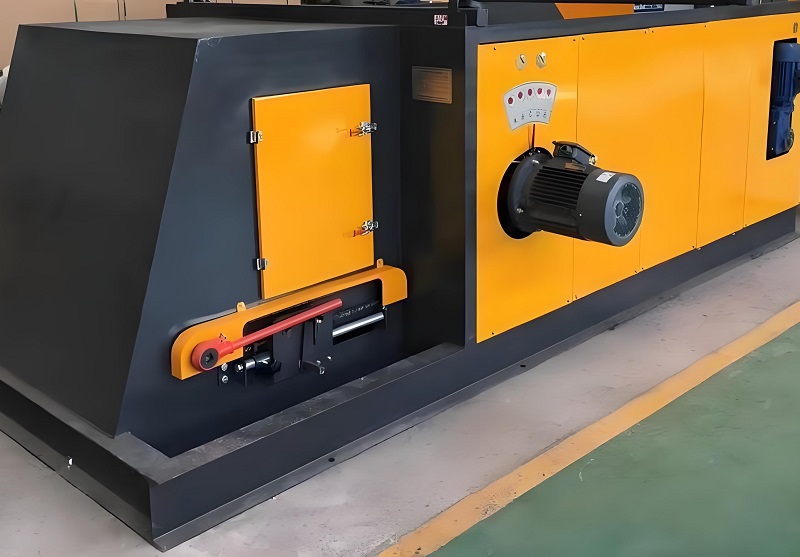
1. High Separation Accuracy and Wide Range of Applicable Materials
Eddy current separators offer outstanding separation accuracy, achieving a purity of over 90% for non-ferrous metals. Some high-end models can even exceed 95% purity for commonly used non-ferrous metals such as copper and aluminum, with stable and reliable separation results. The equipment adopts an optimized magnetic system design with high magnetic field strength and controllable alternating frequency. Parameters can be precisely adjusted for different types and particle sizes of non-ferrous metals, enabling the separation of both large metal blocks and fine metal particles, with a wide range of adaptable particle sizes. Meanwhile, the equipment boasts strong compatibility with varying material moisture content and impurity levels, enabling sorting without complex pretreatment. It is suitable for both dry materials and slightly moist mixtures, covering the sorting needs of various materials including industrial solid waste, municipal solid waste, recycled resources, and metallurgical slag, demonstrating exceptional versatility.
2. High Sorting Efficiency and Powerful Processing Capacity
This equipment utilizes a high-speed magnetic roller design, with roller speeds reaching approximately 3000 rpm. Materials passing through the magnetic field achieve millisecond-level separation, resulting in fast sorting speeds and high operating efficiency. It can operate continuously for 24 hours, processing capacities ranging from several tons to tens of tons per hour, fully meeting the capacity demands of large-scale production. Compared to manual sorting and traditional mechanical sorting, the eddy current separator offers several times the operating efficiency, with no jamming or missed sorting, significantly shortening the material handling cycle and improving enterprise production efficiency. It is particularly suitable for large-scale, continuous solid waste treatment scenarios, effectively solving the problems of material backlog and delayed disposal.
3. Pure Physical Sorting, Green, Environmentally Friendly, and Energy-Saving
The eddy current separator adopts dry, pure physical sorting technology, requiring no water or chemical reagents throughout the process. This completely eliminates the environmental hazards associated with wet sorting, such as wastewater pollution and chemical residues, and produces no secondary pollution, meeting stringent environmental protection requirements. Simultaneously, the equipment utilizes a high-efficiency energy-saving motor and an optimized magnetic system structure, significantly reducing energy consumption compared to traditional sorting equipment. During operation, there is no noise pollution or dust leakage, protecting the working environment and reducing environmental governance and energy costs for enterprises, thus practicing the concept of green production.
4. Reasonable Structural Design, Stable and Durable Operation
The equipment features a compact and scientifically laid-out structure. Core components are made of high-strength, wear-resistant, and corrosion-resistant materials. The magnetic rollers use permanent magnets or high-performance electromagnetic structures, ensuring strong magnetic field stability, resistance to demagnetization, and a long service life. The machine body is equipped with dustproof and anti-jamming designs, effectively preventing material blockage and damage from hard object impacts, making it suitable for harsh and complex working environments. Meanwhile, the equipment operates smoothly with minimal vibration and noise, free from mechanical impact damage, and has a low failure rate for core components. It maintains stable operation over extended periods, reducing downtime for maintenance and ensuring continuous production line operation.
5. Convenient Operation and Low Maintenance Costs: Modern eddy current separators are mostly equipped with intelligent control systems, featuring one-button start-up and visual parameter adjustment. Operation is simple and easy to understand, requiring no specialized technicians, thus lowering the operational threshold. Routine maintenance only requires periodic cleaning of debris and inspection of component wear; complex maintenance procedures are unnecessary, making maintenance simple and cost-effective. Furthermore, the equipment's core components are highly durable, and the replacement cycle for vulnerable parts is long, further reducing subsequent maintenance investment. Its outstanding cost-effectiveness makes it suitable for the production needs of enterprises of all sizes.
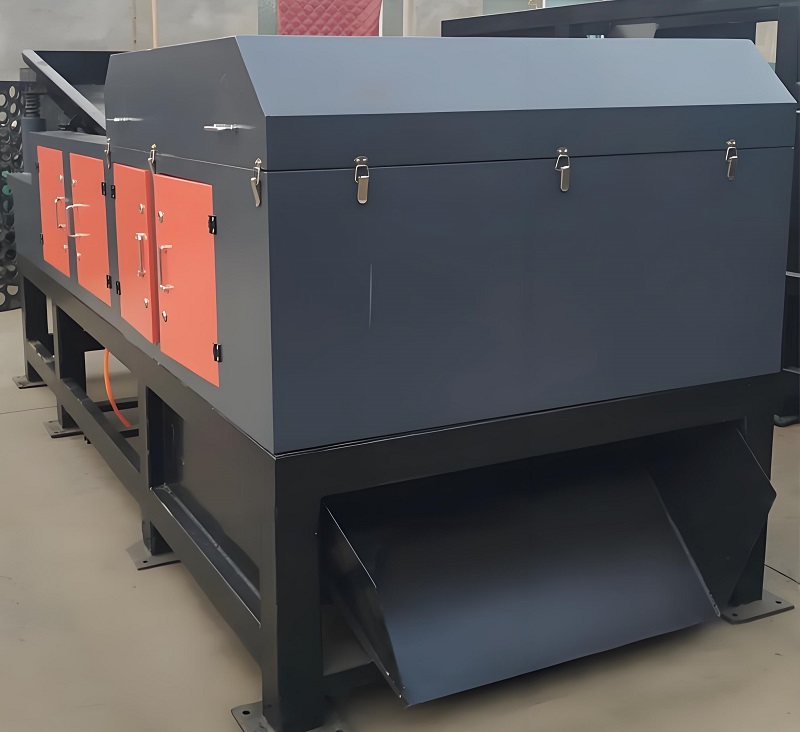
6. High Adjustability and Adaptability to Diverse Working Conditions: The equipment can flexibly adjust parameters such as magnetic roller speed, magnetic field strength, and conveyor belt speed according to actual working conditions such as material type, metal content, and particle size. This allows for precise control of sorting force and effect, achieving differentiated sorting of different non-ferrous metals. Some high-end models employ an eccentric magnetic system design, which further optimizes the magnetic field distribution, improves the sorting effect of fine metals, and effectively prevents magnetic materials from scratching the conveyor belt, extending the equipment's service life. Furthermore, the equipment can be flexibly installed according to the production line layout, operating independently or integrated into existing production lines, offering strong adaptability to meet customized sorting needs in different scenarios.
Eddy current separators, with their highly efficient and precise sorting capabilities, environmentally friendly operating mode, and stable and durable performance, have become core equipment in the fields of resource recycling and solid waste treatment. They not only solve the industry pain points of non-ferrous metal recycling but also help enterprises achieve cost reduction, efficiency improvement, and green production. They continue to play a vital supporting role in the high-quality development of the resource recycling industry. In the future, with continuous technological upgrades, their sorting performance and applicable scenarios will be further expanded, injecting stronger momentum into the development of the circular economy.


Company: Zhengzhou ZhongCheng environmental protection equipment co., LTD

Company address: 36 xueyuan road, Zhengzhou City, Henan Province, China.

Whatsapp:+86-18738194110


Our Email

Our phone
 86-18738194110
 86-18738194110

Save Time! Get A Detailed Quotation Quickly.


 2026-04-22