Consulting
Service
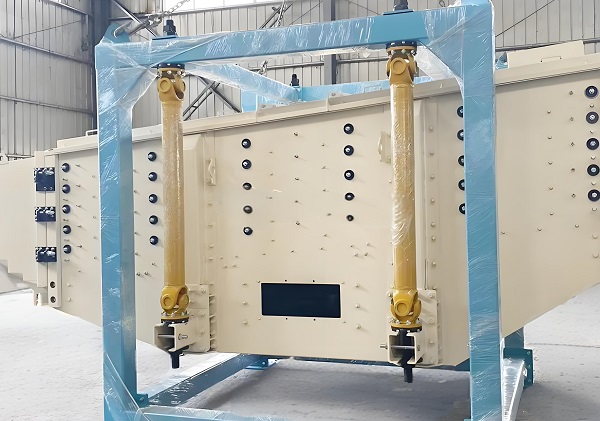
The swing screen, a fine screening device based on the principle of simulated manual swing screening, is widely used in industries such as chemical, pharmaceutical, food, metallurgy, building materials, and grain due to its advantages of high screening efficiency, excellent precision, long screen life, and low noise. It is suitable for fine grading of various materials, including granules, powders, and slurries. As a core screening device in the production line, the installation quality of the swing screen directly determines the stability of its operation. Proper maintenance can extend the equipment's lifespan, reduce the failure rate, and ensure continuous and efficient screening operations. The following will comprehensively outline the installation specifications, key points of commissioning, and detailed maintenance procedures for swing screens, providing practical guidance for the safe and stable operation of the equipment and helping enterprises improve screening efficiency and reduce operating costs.

A. Key Points for Standardized Installation of swing screens The installation of swing screens must adhere to the principles of "thorough preparation in advance, standardized and orderly processes, and accurate and error-free commissioning," taking into account site adaptability, equipment stability, and operational safety. Improper installation must be avoided to prevent problems such as abnormal vibration, uneven screening, and excessive wear of components, thus laying a solid foundation for subsequent stable operation.
1. Pre-installation Preparations
Before installation, thorough preparation is required in terms of site, equipment, and personnel to mitigate potential installation risks. First, verify the installation site, ensuring the ground is flat, firm, and meets load-bearing capacity standards, with no risk of subsidence or collapse. Sufficient space should be provided for operation, maintenance, and material transport. Avoid flammable, explosive, or highly corrosive environments, and ensure good ventilation and lighting conditions that meet equipment operation safety standards. Second, inventory all equipment parts. Check each component against the packing list: main unit, screen frame, screen mesh, motor, transmission mechanism, shock absorber springs, bolts, washers, etc. Inspect for any damage, deformation, or missing parts. Check the screen mesh for damage or burrs, and ensure fasteners are intact. Replace any problematic parts immediately. Finally, prepare personnel and tools. Assign experienced professionals to perform the installation. Prepare installation tools such as a level, torque wrench, screwdriver, and lubricant. Thoroughly study the equipment installation manual, understanding the installation process, technical parameters, and precautions to avoid blind installation.
2. Standardized Installation Process The installation of the swing screen must be carried out in an orderly manner according to the steps. The core process consists of four steps: base fixing, main unit assembly, component docking, and protective installation. The first step is to install the base and vibration damping device. Place the equipment base stably on the pre-set site and use a level to calibrate the base's levelness, ensuring that the horizontal error is controlled within a reasonable range. Then install the vibration damping springs, ensuring that the springs are evenly stressed and without skew, to buffer vibration, reduce noise, and prevent vibration from being transmitted to the ground and affecting surrounding equipment during operation. The second step is to assemble the main unit and screen frame. Securely connect the main unit body to the base, and install the screen frame layer by layer according to the material screening requirements, ensuring that the screen frame is level, tightly sealed, and without any gaps. The screen mesh must be flat and taut, avoiding wrinkles or looseness. At the same time, clean the screen mesh surface of debris to prevent foreign matter residue from affecting the screening effect. The third step is to connect the transmission and power components, install the motor, pulleys, drive belts, and other components, calibrate the coaxiality of the motor and transmission mechanism, ensure proper belt tension and smooth transmission without deviation or jamming, and strictly follow electrical specifications during wiring, ensuring proper grounding protection and eliminating potential circuit hazards. The fourth step is to install protective devices, adding dust covers, inspection doors, and other protective components, sealing all connection gaps to reduce dust leakage, and checking all fasteners, tightening bolts with a torque wrench to prevent loosening or falling off due to vibration during operation.
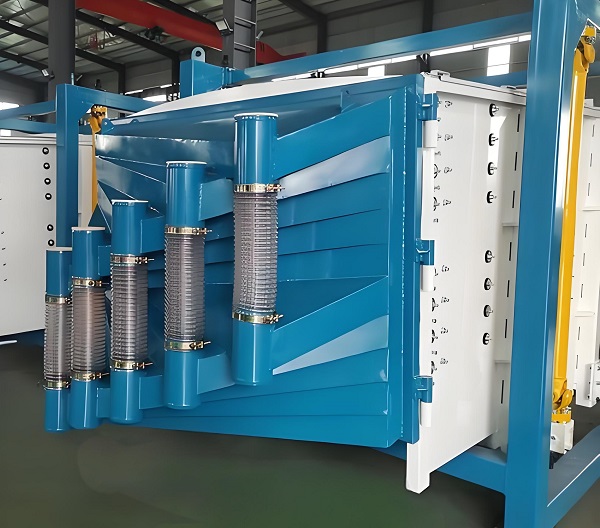
3. Key Post-Installation Commissioning Steps After installation, no-load and load commissioning must be performed to verify the equipment installation quality and operational performance. During no-load commissioning, manually rotate the transmission mechanism first to check for any jamming or abnormal noise. After confirming everything is correct, connect the power and run the equipment under no-load for at least 30 minutes. Observe the equipment's operating status, checking if the vibration is stable, if the speed is within the standard range, and if there is any abnormal noise. Check the bearing temperature and motor temperature rise to ensure that all parameters meet the requirements of the instruction manual. If any wobbling or abnormal noise occurs, immediately stop the machine and troubleshoot, adjusting the damping springs, fasteners, or transmission components. Load commissioning should be conducted based on the actual material being screened. Gradually add an appropriate amount of material, observing whether the material screening trajectory is uniform and whether there is any deviation or accumulation. Check if the screening accuracy and discharge speed meet the standards, and whether there are any issues with material blockage or leakage on the screen. Simultaneously, fine-tune parameters such as amplitude and tilt angle to adapt to the material characteristics until the equipment operates stably and the screening effect meets the standards before putting it into formal operation.
B. Full-Cycle Maintenance of the swing screen Proper maintenance is crucial for ensuring the efficient operation and extended service life of the swing screen. A full-cycle maintenance system encompassing "daily inspections, regular maintenance, and emergency response" must be established. Targeted component maintenance, lubrication, and repair should be performed to promptly eliminate potential problems, reduce equipment failure rates, and minimize downtime losses.

1. Daily Maintenance (Mandatory for Every Shift) Daily maintenance focuses on inspecting the equipment's operating status, ensuring "frequent checks, early detection, and rapid handling." Before starting each shift, check the screen tension and integrity, clean any residual material and debris from the screen surface to prevent clogging; check for loose bolts and nuts, deformed or damaged shock-absorbing springs, and worn, misaligned, or cracked drive belts; check the electrical wiring and grounding devices for integrity, and ensure switches and buttons are responsive. During operation, continuously observe the equipment's operating status, listen for abnormal noises, monitor bearing and motor temperatures, and strictly prohibit overloading or operation beyond the material's characteristics. If material accumulation, abnormal screening, or excessive temperature are found, immediately stop the machine for investigation. After operation, promptly clean the screen frame and any residual material inside the machine body, wipe off dust from the equipment surface, turn off the power, and thoroughly clean the equipment. Simultaneously, record the equipment's operating time and status, and establish a daily maintenance log.
2. Regular Maintenance (Weekly/Monthly/Quarterly) Regular maintenance should be implemented according to a tiered schedule, thoroughly investigating potential equipment hazards and maintaining core components. Weekly maintenance focuses on checking transmission components, adjusting belt tension, and replacing severely worn belts; tightening loose fasteners in all areas; checking screen wear, repairing minor damage to screens, and replacing aged or damaged screens; cleaning bearing dust seals, checking their effectiveness, and preventing dust from entering the bearings and accelerating wear. Monthly maintenance requires disassembling and cleaning the transmission mechanism and bearing assemblies, replacing aged seals, checking bearing clearances, and replacing bearings with excessive wear; checking motor performance, cleaning internal dust, and verifying insulation performance; checking the elasticity of shock absorber springs, and replacing deformed or failed springs simultaneously to prevent unilateral spring failure from causing equipment vibration imbalance. Quarterly maintenance involves in-depth repairs, including complete disassembly of the equipment, cleaning of the machine body and screen frame interiors, inspection for cracks and deformation, and repair or replacement of damaged parts. The equipment's levelness and transmission mechanism coaxiality are recalibrated, and all lubricating grease is replaced. The electrical system is inspected for aging, and aging wiring is replaced to ensure safe electrical operation.
3. Specialized Maintenance of Core Components: Specialized maintenance is required for the core components of the swing screen to extend their service life. As a consumable part, the screen mesh must be made of a suitable material according to the characteristics of the material. Avoid feeding sharp or hard objects during operation. Regularly clean any material clogging the mesh, and replace it promptly if any damage is found, ensuring proper screen tension during replacement. Bearings, as core operating components, require regular lubrication with suitable grease to ensure sufficient lubrication. Strictly control bearing temperature rise and prevent bearing burnout caused by insufficient oil or dust intrusion. Avoid contact with oil and sharp objects for drive belts. Regularly adjust tension to prevent slippage and misalignment. Replace belts in pairs when severely worn to ensure transmission efficiency. Regularly check the elasticity and integrity of shock-absorbing springs; never replace only one side to prevent uneven stress and abnormal equipment vibration.
4. Emergency Handling of Common Faults For common faults of the swing screen, it is necessary to master emergency handling methods to quickly restore operation. Abnormal equipment vibration and machine body sway are often caused by failed shock-absorbing springs, loose fasteners, or level imbalance. The machine should be stopped immediately, damaged springs replaced, fasteners tightened, and the level recalibrated. Screen clogging and low screening efficiency are often caused by screen damage, excessive material moisture, or mismatched amplitude. Clogged screens need to be cleared, screens replaced, material moisture content strictly controlled, and equipment amplitude fine-tuned. Overheating and abnormal noise in bearings are often due to insufficient lubrication, wear, or dust intrusion. Lubricating grease should be added promptly, bearings disassembled and cleaned, and those with excessive wear replaced. Slippage and misalignment of drive belts are often caused by belt looseness or axle misalignment. Belt tension should be adjusted, and axle coaxiality calibrated.
The installation and maintenance of the swing screen are crucial for ensuring equipment performance and extending its service life. Proper installation lays a solid foundation for equipment operation and avoids inherent problems. Meticulous and routine maintenance can promptly eliminate operational faults, improve screening efficiency, and reduce operating costs. In actual operation, operators must strictly follow installation specifications, implement full-cycle maintenance procedures, and perform daily inspections, regular maintenance, and emergency troubleshooting. They must also optimize equipment parameters based on material characteristics and standardize operating procedures. Only by balancing installation quality and standardized operation and maintenance can the fine screening advantages of the swing screen be fully utilized, ensuring continuous and stable operation of the production line, helping enterprises improve production efficiency and achieve long-term development.


Company: Zhengzhou ZhongCheng environmental protection equipment co., LTD

Company address: 36 xueyuan road, Zhengzhou City, Henan Province, China.

Whatsapp:+86-18738194110


Our Email

Our phone
 86-18738194110
 86-18738194110

Save Time! Get A Detailed Quotation Quickly.



 2026-04-22