Consulting
Service
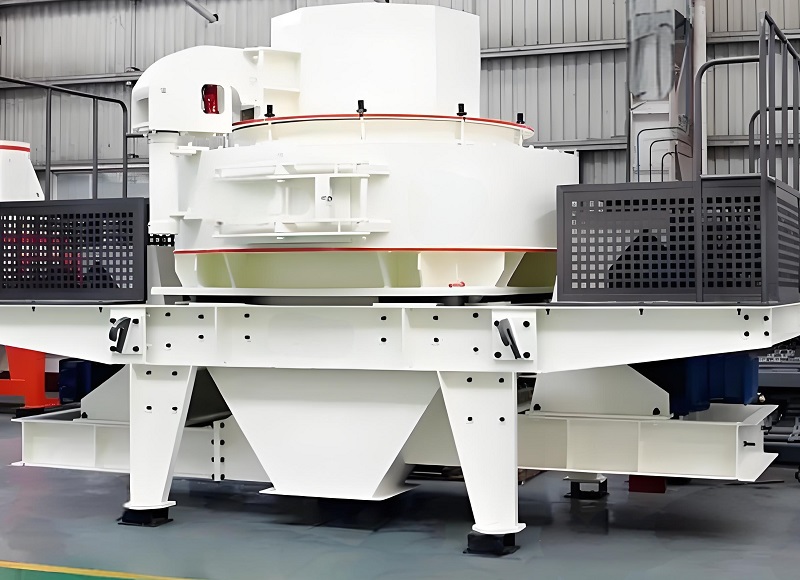
The VSI high-efficiency vertical shaft impact crusher (hereinafter referred to as "VSI crusher") is the core equipment for manufactured sand production and aggregate shaping. Relying on the crushing principle of "stone-on-stone" and "stone-on-iron," it achieves efficient crushing and shaping of materials. Its operating status directly determines the capacity, finished product quality, and maintenance costs of the entire production line. Scientific and systematic daily maintenance is key to ensuring continuous and stable operation and extending the service life of the equipment. The following details the key points of daily maintenance for the VSI crusher from four dimensions: daily inspection, core component maintenance, system maintenance, and fault prevention.
A. Daily Inspection: Building the First Line of Defense for Operational Safety
Daily inspection is the foundation of VSI crusher maintenance. It should be done "at fixed times, at fixed locations, and for fixed items." Through sensory judgment and simple testing, potential hazards should be identified in a timely manner to prevent small problems from developing into major failures. It is recommended to conduct inspections every 2 hours, focusing on the following aspects:
1. Appearance and Operating Status Inspection
Observe whether the overall operation of the equipment is stable and whether there is any abnormal vibration or shaking. If the machine body shakes violently, it may be due to loose anchor bolts, impeller imbalance, or uneven material feeding. Immediately stop the machine and check the fasteners and feeding conditions.
Listen to the operating sound. Under normal operating conditions, the sound should be a uniform, low-pitched crushing sound. Sharp, abnormal noises or impact sounds likely indicate that the impeller wear-resistant blocks have fallen off or that foreign objects such as iron blocks have entered the cavity. Immediately stop the machine and clean it to prevent damage to the cavity.
Check the machine's sealing condition. Verify that the belt guard and cavity cover are tightly closed and that there is no dust or material leakage. Sealing failure not only causes environmental pollution but can also allow external impurities to enter core components such as bearings and gearboxes, accelerating wear.
2. Lubrication and Temperature Monitoring. Touch the bearing housing, motor housing, and gearbox housing to check for abnormal temperatures. The normal operating temperature should be controlled below 60℃. If it exceeds 70℃, immediately stop the machine and investigate the cause, which may be insufficient grease, damaged bearings, or a cooling system malfunction.
Check that the lubrication lines are clear and that there is no leakage or deterioration of the grease (or lubricating oil). If the grease becomes thinner or discolored (e.g., turns black or clumps), it indicates that the grease has failed and needs to be replaced promptly to prevent permanent damage to the bearings due to dry friction.
3. Feed and Discharge Monitoring: Observe whether the material flow rate at the feed inlet is stable and whether there are any blockages or material interruptions. Uneven feeding will cause impeller load fluctuations and vibration, while material interruptions will cause idling wear. The feeder speed needs to be adjusted to ensure continuous and uniform feeding.
Check whether the particle size of the finished product at the discharge outlet meets the standard. Poor discharge may be due to wear on the discharge outlet liner or pipe blockage. The liner needs to be cleaned or replaced promptly.
B. Core Component Maintenance: Extending Service Life and Reducing Operating Costs: The core components of the VSI sand making machine (impeller, wear-resistant blocks, bearings, gearbox, belts) are the focus of maintenance. Their condition directly determines the equipment performance and requires targeted maintenance and repair.
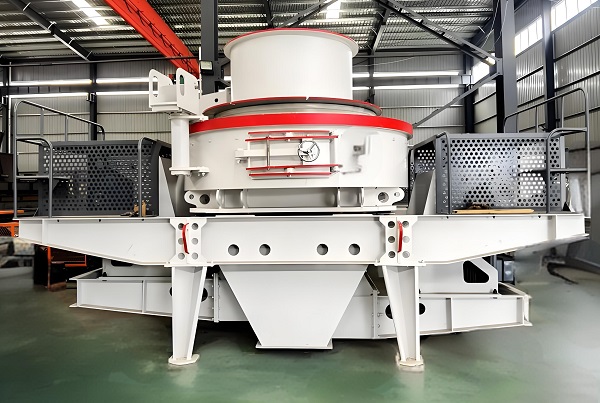
1. Impeller and Wear Block Maintenance
The impeller is the core working component of the VSI sand making machine. Wear blocks (distribution plate, wear plate) are vulnerable parts and require regular inspection for wear and timely replacement.
Inspection Cycle: Inspection should be conducted every 100-200 hours, adjusting the frequency based on material hardness and output.
Maintenance Points: Wear blocks must be replaced immediately when wear exceeds 1/3 of their original thickness. Replacement should be done in pairs to ensure impeller weight balance and prevent vibration during operation. Simultaneously, inspect the impeller inner wall and blades for cracks and deformation. Minor cracks can be repaired by welding; severe deformation necessitates replacement to prevent impeller breakage and potential safety accidents.
Operational Precautions: When replacing wear blocks, ensure the bolt tightening torque meets the equipment manual requirements to prevent loosening and detachment during operation.
2. Bearing and Gearbox Maintenance
Bearings and gearboxes are the "heart" of the equipment. Lubrication and maintenance are crucial, requiring strict adherence to the principle of "regular grease replenishment and periodic oil changes."
Bearing Maintenance: Use lithium-based grease for lubrication. Top up the bearing weekly, filling it to 1/3 to 1/2 of its capacity. Too much grease can lead to poor heat dissipation, while too little will result in insufficient lubrication. Replace the grease completely every 6-12 months, cleaning the bearings and inspecting the balls and raceways for wear and pitting. Replace immediately if fatigue damage is observed.
Gearbox Maintenance: The gearbox uses gear oil for lubrication. Check the oil level and quality monthly, topping up when the level is below the mark. Change the gear oil every 3-6 months, cleaning the oil pan and checking for wear on the gear meshing surfaces and loose bearings. Also, check for aging gearbox gaskets and leaks. Replace gaskets immediately if leaks occur to prevent lubricant loss.
3. Belt and Pulley Maintenance: Belt drive systems require careful monitoring of tension and wear to ensure transmission efficiency.
Belt Inspection: Check the belt surface weekly for cracks, wear, and delamination, and ensure the belt edges are neat. If the belt wear exceeds 10% of its original thickness, or if cracks or slippage appear, it must be replaced immediately.
Tension Adjustment: Press the middle of the belt with your fingers; a pressure of 10-20mm is ideal. Too loose a belt will cause slippage and reduced transmission efficiency, while too tight a belt will increase bearing load and accelerate wear. During adjustment, loosen the motor mounting bolts and move the motor to adjust the tension, ensuring the pulley grooves of both pulleys are aligned.
Pulley Inspection: Check the pulley grooves for wear and steps. Severe wear will cause belt misalignment and accelerated wear; the pulley must be replaced immediately.
C. System Maintenance: Ensuring Efficient Operation of Auxiliary Systems
The auxiliary systems of the VSI sand making machine (lubrication system, cooling system, electrical system) are the "protective umbrella" for the core components and require regular maintenance to prevent damage to core components due to auxiliary system malfunctions.
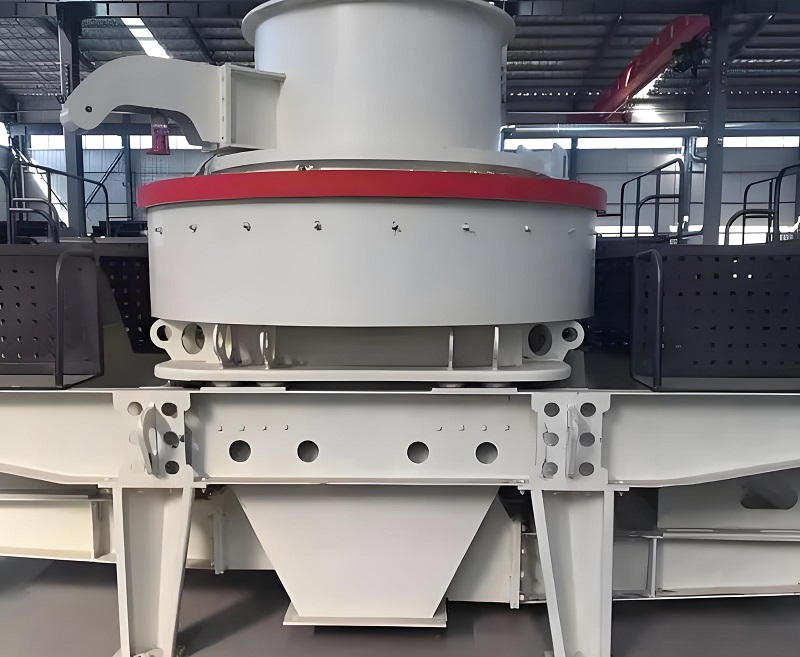
1. Lubrication System Maintenance
The lubrication system includes components such as the oil pump, oil pipes, and oil cups, which must be inspected regularly to ensure normal operation.
1. Check the oil pump's operating status and ensure the pressure meets equipment requirements (typically 0.2-0.4 MPa). Insufficient pressure will prevent grease from reaching lubrication points.
Clean oil pipes of blockages and check for aging, cracks, or leaks. Replace damaged pipes promptly.
Regularly clean the oil cup and oil filter to remove impurities and prevent blockages in the oil passages.
2. Cooling System Maintenance
For high-temperature conditions or crushing high-hardness materials, the cooling system is crucial, primarily including water-cooling and air-cooling systems.
Water-cooling system: Check for smooth cooling water circulation, sufficient water level in the tank, and leaks or blockages in the water pipes. Regularly clean the water tank and pipes to remove scale and impurities, ensuring effective heat dissipation.
Air-cooling system: Clean dust and debris from the fan blades and heat sink fins to prevent blockages and poor heat dissipation. Check the fan's operation for abnormal noises and vibrations, and ensure the fan belt tension is appropriate.
3. Electrical System Maintenance
The electrical system is the "nerve center" of the equipment and requires dustproof, moisture-proof, and short-circuit-proof maintenance.
Regularly clean dust and debris from the electrical control cabinet, keeping it dry to prevent dust accumulation and short circuits.
Inspect motor terminals and cables for aging, damage, or looseness. Tighten terminals promptly and replace damaged cables.
Test the sensitivity of electrical protection devices (such as overload protection, short-circuit protection, and emergency stop buttons) to ensure timely shutdown in case of equipment failure.
Regularly check the motor insulation resistance. If the insulation resistance is below 0.5MΩ, dry the motor to prevent burnout.
D. Fault Prevention: Proactive troubleshooting to reduce downtime losses
In addition to routine maintenance and component upkeep, proactively identifying potential faults and developing emergency response plans can minimize downtime and ensure production continuity.
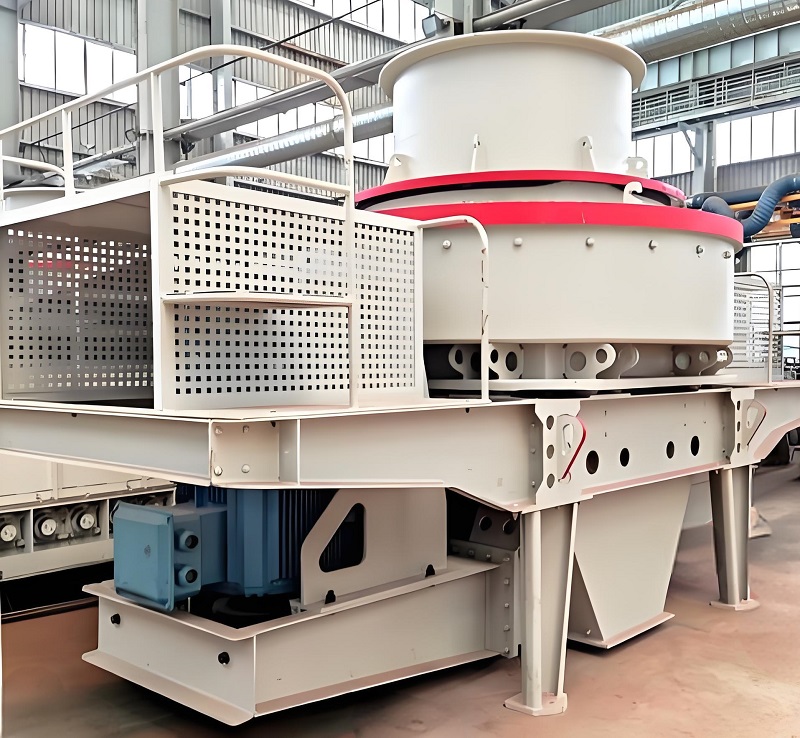
1. Common Fault Prevention
Excessive Vibration: In addition to regularly checking anchor bolts and impeller balance, strictly control the feed particle size to prevent oversized materials from entering the chamber; simultaneously, control the material moisture content to prevent material adhesion and blockage.
Reduced Output: Replace worn wear-resistant blocks and liners promptly, adjust impeller speed; optimize feeding conditions to ensure even material distribution within the impeller chamber and avoid localized accumulation.
Bearing Overheating: Ensure sufficient and high-quality grease; clean bearings regularly; check the cooling system for proper operation; under high-temperature conditions, appropriately increase cooling time.
2. Emergency Response Preparation
Develop an emergency plan for equipment failures, clearly defining shutdown, troubleshooting, and maintenance procedures; equip with commonly used wear parts (such as wear-resistant blocks, bearings, and belts) and maintenance tools to ensure rapid response in case of failure.
Operators must undergo professional training and be familiar with the equipment structure, operating procedures, and troubleshooting methods to avoid equipment failures caused by improper operation.
Routine maintenance of VSI sand making machines is a systematic task that must adhere to the principle of "prevention first, combined with control," standardizing and routinely performing inspections, maintenance, and repairs. By strictly implementing the daily inspection system, carrying out targeted maintenance of core components, ensuring the efficient operation of auxiliary systems, and proactively identifying potential faults, we can extend the service life of equipment, reduce operating costs, and guarantee the production line's capacity and finished product quality, thereby creating stable economic benefits for the enterprise.


Company: Zhengzhou ZhongCheng environmental protection equipment co., LTD

Company address: 36 xueyuan road, Zhengzhou City, Henan Province, China.

Whatsapp:+86-18738194110


Our Email

Our phone
 86-18738194110
 86-18738194110

Save Time! Get A Detailed Quotation Quickly.



 2026-04-22