Consulting
Service
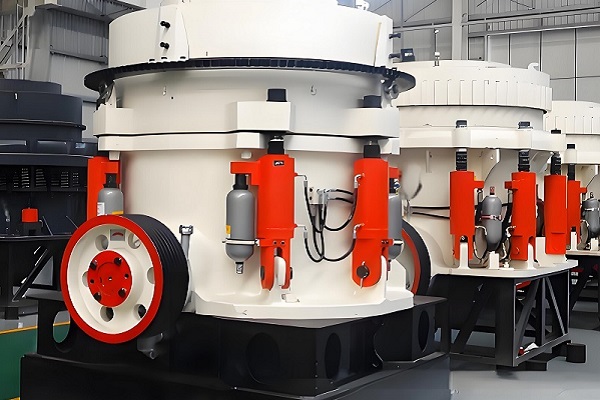
Vertical compound crushers, also known as compound crushers, are core fine crushing equipment in industrial crushing and sand making fields, combining high efficiency and versatility. They integrate the advantages of impact crushing and hammer crushing, and with their screenless, adjustable, and vertical structure, they break through the application limitations of traditional crushing equipment. They can perform fine crushing of high-hardness and medium-hard materials, and adapt to the production needs of multiple scenarios and working conditions. They play an irreplaceable role in industries such as mining, building materials production, metallurgy, chemicals, and road infrastructure, becoming a key link in modern crushing and sand making production lines, comprehensively contributing to improved quality, efficiency, and cost reduction in industrial production.
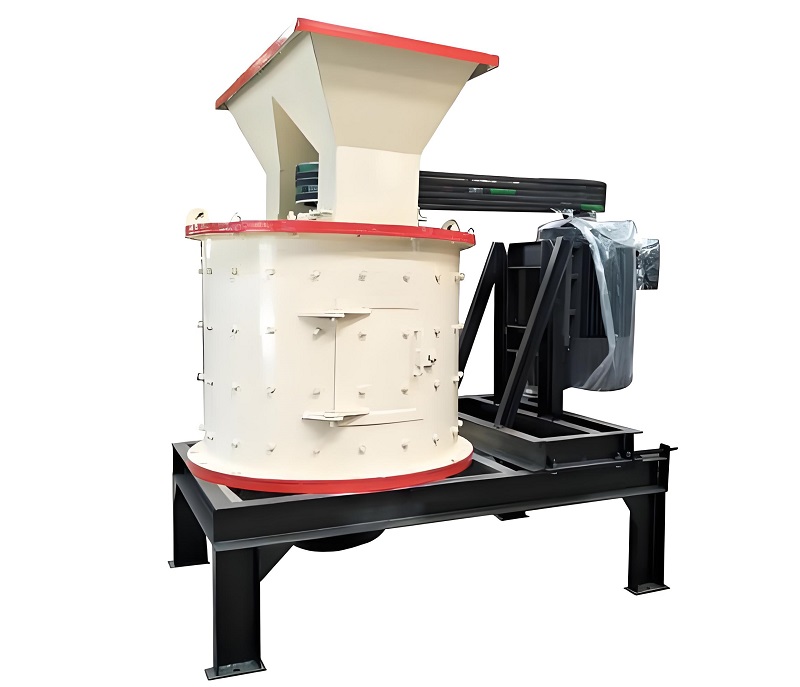
1. Core Material Crushing Function: Achieving Efficient and Fine Grinding The core function of vertical compound crushers is to complete the medium and fine crushing and coarse grinding of various ores and industrial raw materials, solving the pain points of traditional crushing equipment such as small crushing ratio, uneven particle size, and easy clogging, achieving efficient conversion of materials from large pieces to qualified fine materials. During operation, material falls vertically into the crushing chamber from above, where it is impacted and struck by the high-speed rotating rotor hammers. It then collides, is squeezed, and ground by the impact plates and the material flow itself. Through multiple crushing chambers, the material is progressively refined, ultimately forming a uniformly sized finished product. No additional screening is required throughout the process, resulting in crushing efficiency far exceeding that of conventional fine crushing equipment.
This equipment boasts outstanding crushing capacity, achieving an extremely high maximum crushing ratio. It can handle 100-220mm blocky materials as feed, and the output particle size is flexibly adjustable and unaffected by wear on the liners and hammers. The finished product contains 70%-90% fine particles ≤3mm, fully meeting the particle size requirements for manufactured sand, building material aggregates, and metallurgical powders. Furthermore, the equipment employs a screenless design, completely solving the problem of material clogging when crushing high-moisture, high-mud content materials. Even when processing materials with a moisture content ≤15%, it maintains continuous and stable operation, adapting to the crushing needs of various complex materials and truly achieving highly efficient "through-flow" crushing.
2. Process Adaptation Role: Optimizing Production Flow and Reducing Overall Costs
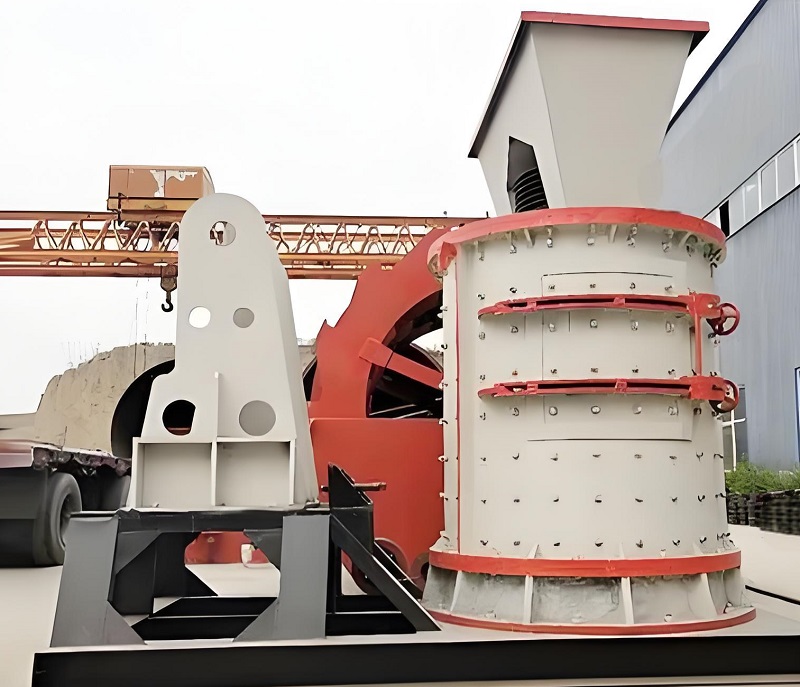
In industrial production processes, the vertical compound crusher is not merely a single crushing device, but a core component for optimizing the production chain, reducing processes, and lowering energy consumption. Its process adaptation role spans the entire process of crushing, sand making, and grinding, significantly improving the operational efficiency of the entire production line. On one hand, the equipment combines fine crushing and coarse grinding functions, replacing multiple traditional crushing and coarse grinding devices, achieving "one machine for multiple uses," reducing equipment investment and site occupation, simplifying production layout, and lowering initial infrastructure and equipment procurement costs.
On the other hand, when used in conjunction with grinding equipment such as ball mills, the vertical compound crusher can exert a significant "pre-crushing" efficiency-enhancing effect. Materials pre-treated by the compound crusher have finer particle sizes and more regular particle shapes, which can significantly reduce the grinding load on the ball mill, increasing ball mill output by approximately 40%, while simultaneously reducing the system power consumption of the entire production line by approximately 30%, effectively alleviating the problems of high energy consumption and low efficiency in the grinding stage. Furthermore, the equipment's vulnerable parts are made of high-hardness, high-toughness multi-alloy wear-resistant materials. The hammers are reversible, resulting in minimal wear and a long service life. Combined with a convenient maintenance structure, this significantly reduces equipment downtime for maintenance, lowers subsequent operating costs and material losses, and maximizes production efficiency.
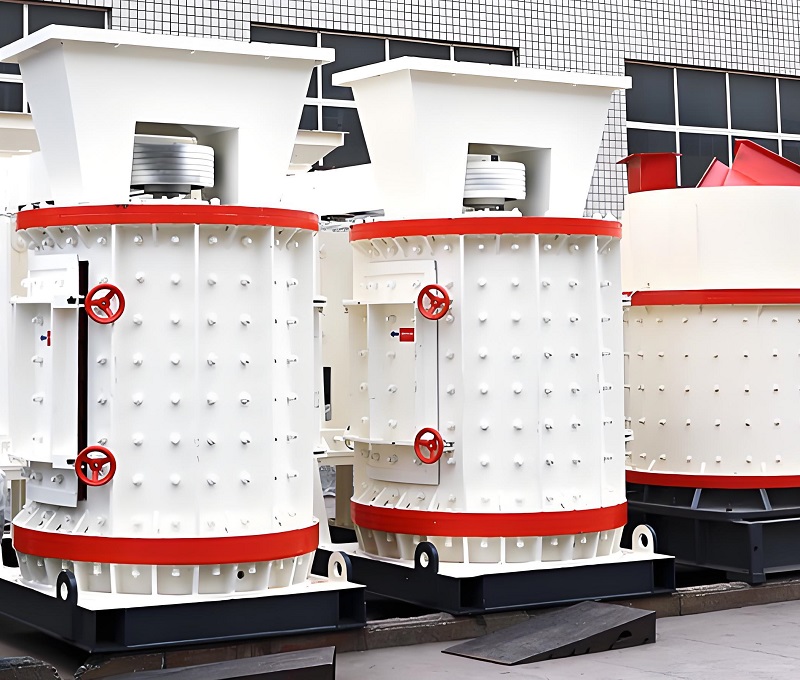
3. Multi-Industry Applications: Empowering Production Quality and Efficiency Improvement Across Various Sectors
With its powerful crushing performance and wide material adaptability, the vertical composite crusher covers multiple core industries such as building materials, mining, metallurgy, chemicals, and infrastructure. It offers differentiated practical value to meet the production needs of different sectors, becoming a powerful assistant for improving quality and efficiency in various industries.
In the cement and building materials industry, it is a core piece of equipment for the fine crushing of cement raw materials and clinker. It can efficiently crush raw materials such as limestone, dolomite, bauxite clinker, and refractory materials, producing uniformly sized fine particles that meet the process requirements of cement firing and refractory material processing, ensuring stable quality of building materials. In the mining industry, it is suitable for crushing medium-hard and high-hardness ores such as iron ore, lead-zinc ore, phosphate rock, and serpentine, as well as finely crushing special materials such as corundum and glass raw materials, facilitating the refined processing of ore resources and improving ore utilization. In the field of metallurgical solid waste treatment, it can crush industrial waste such as blast furnace slag, steel slag, and coal gangue, enabling the recycling and reuse of solid waste resources, aligning with the development concepts of green production and a circular economy.
In the fields of road infrastructure and aggregate production, vertical composite crushers play a particularly prominent role. They are especially suitable for the artificial sand production and road aggregate processing of materials such as granite, basalt, and hard limestone. The crushed sand and gravel have a reasonable particle size distribution and moderate angularity, meeting the aggregate standards for highways, high-speed railways, and municipal construction, while ensuring the quality and output of manufactured sand. This solves the industry problem of natural sand shortage and facilitates the efficient progress of infrastructure projects. At the same time, the equipment operates smoothly, with low noise and good sealing, meeting the environmental protection requirements of various industries, reducing dust leakage and noise pollution, and conforming to modern green production standards.
4. Equipment Characteristics Enabling Role: Ensuring Stable and Reliable Production Operation
In addition to its core crushing and process adaptation functions, the unique structural design of the vertical composite crusher provides multiple guarantees for the stable operation of the production line, further highlighting the practical value of the equipment. The equipment employs a flexible adjustment mechanism, automatically discharging uncrushable materials such as iron pieces and stones, preventing jamming and damage, and improving operational safety. The horizontal bearing arrangement extends bearing life, ensuring stable operation even when crushing high-temperature materials (such as high-temperature cement clinker), broadening the equipment's application range.
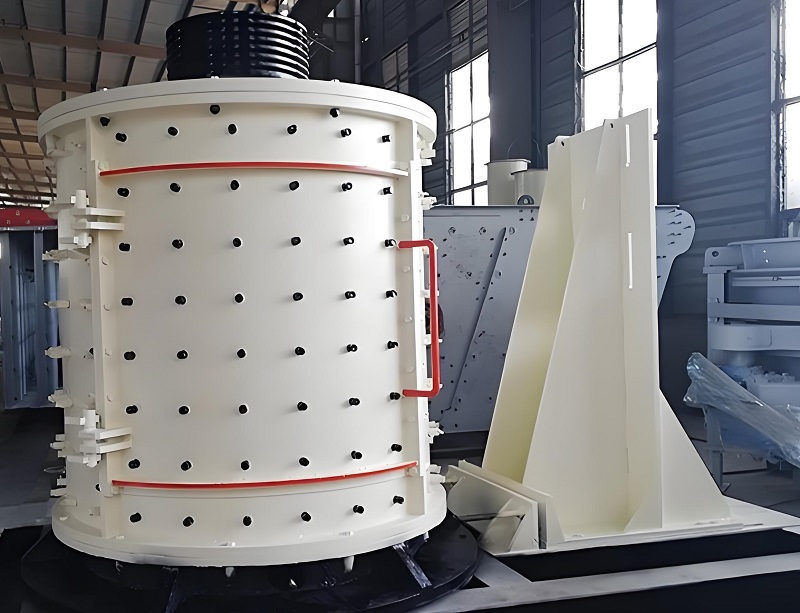
The vertical compound crusher features a compact structure and simple operation, requiring no complex debugging procedures, allowing operators to quickly learn how to use it. The rear chamber is equipped with a screw or hydraulic opening mechanism, eliminating the need to lift the main unit when replacing wear parts, significantly improving maintenance efficiency and further ensuring continuous production line operation. Compared to jaw crushers and cone crushers, it combines high crushing efficiency, low investment cost, and convenient maintenance, making it suitable for large-scale production lines as well as independent crushing needs of small and medium-sized processing plants, adapting to different production scenarios.
The role of vertical compound crushers has long transcended the scope of simple material crushing. They are not only a core tool for achieving fine crushing in industrial production, but also a key piece of equipment for optimizing production processes, reducing operating costs, and practicing green production. With their core advantages of high efficiency, energy saving, versatility, and reliability, they continue to play an important role in industrial processing and infrastructure, driving the transformation and upgrading of production in various industries towards high efficiency, intensification, and greening.


Company: Zhengzhou ZhongCheng environmental protection equipment co., LTD

Company address: 36 xueyuan road, Zhengzhou City, Henan Province, China.

Whatsapp:+86-18738194110


Our Email

Our phone
 86-18738194110
 86-18738194110

Save Time! Get A Detailed Quotation Quickly.


 2026-04-22